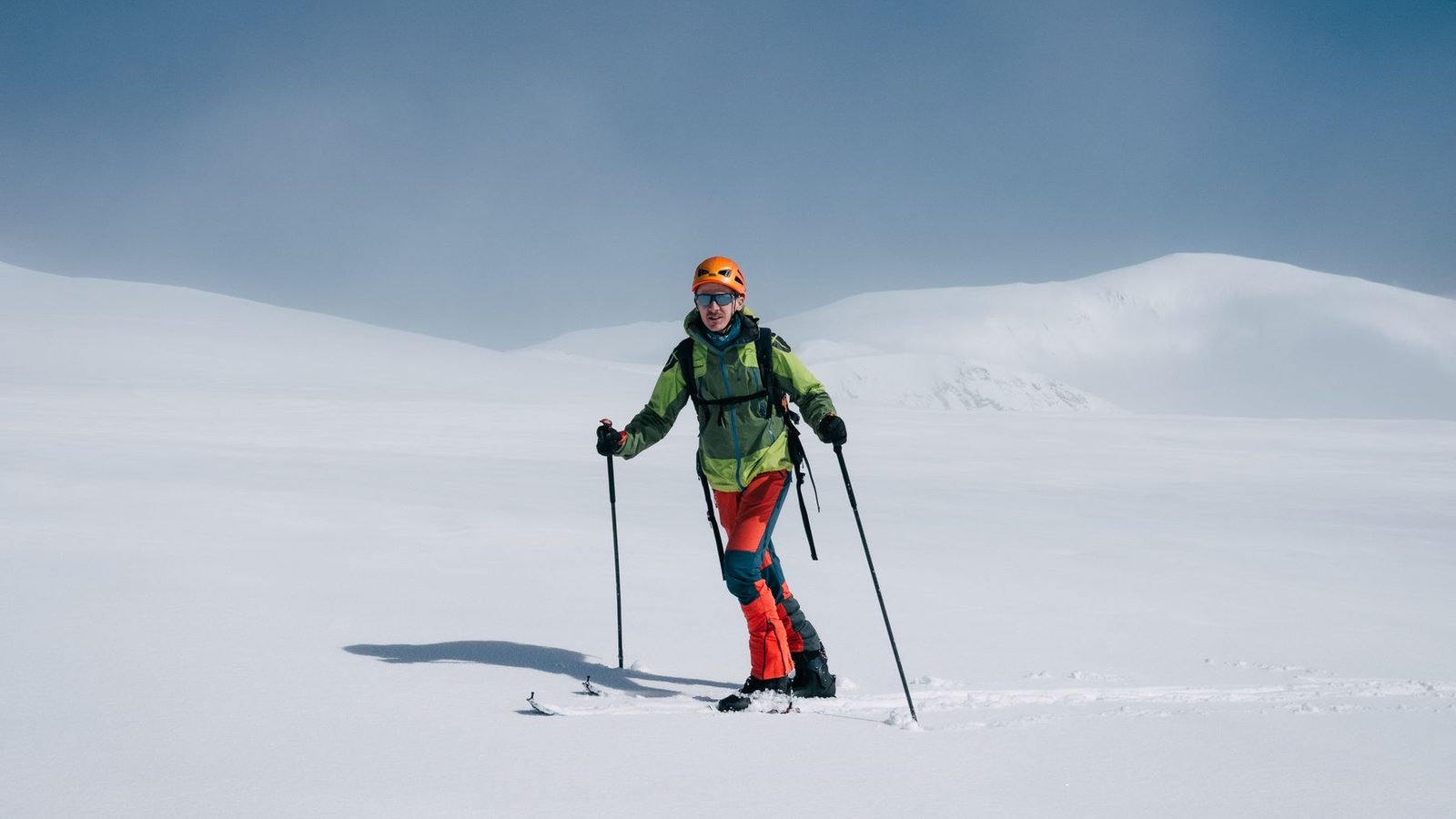
Best Ski Touring Gear 2026 — AT Skis, Boots & Bindings buyers have more options than ever. Alpine touring (AT) ski equipment uses a free-heel binding that unlocks at the toe for uphill skinning (with climbing skins attached to the ski base) and locks at the toe for downhill skiing — allowing skiers to ascend slopes under their own power and then ski down. The AT system is distinct from Nordic/cross-country skiing (lighter, groomed-trail focused) and from standard alpine skiing (no uphill capability). The equipment tradeoff is always uphill efficiency vs. downhill performance: lighter AT setups climb more efficiently but ski more poorly; heavier AT setups with more robust downhill equipment sacrifice uphill weight for better descent performance. The choice depends on the ratio of uphill to downhill time in your typical objective.
| Pick | Award | Key spec | |
|---|---|---|---|
| Dynafit Speed Radical 2.0 Binding | Best Touring Binding | — | Check price |
| Salomon Shift Pro 120 AT Boot | Best Hybrid AT Boot | — | Check price |
| Black Diamond Helio Carbon 95 Ski | Best Touring Ski | — | Check price |
| G3 Alpinist+ Climbing Skins | Best Climbing Skins | — | Check price |
| Scarpa Maestrale RS AT Boot | Best Dedicated Touring Boot | — | Check price |
The Dynafit Speed Radical 2.0 is the touring binding recommendation for skiers who've committed to serious ski touring and want the lightest-per-performance binding available. Dynafit's tech system is the industry standard for backcountry ski touring: the combination of minimal weight (430g), efficient touring pivot, and adequate downhill retention DIN makes it the choice of ski mountaineers, extreme skiers, and dedicated backcountry enthusiasts. For resort-primarily skiers who do occasional tours, a hybrid frame binding provides more downhill security at higher weight; the Speed Radical is for dedicated tourers where uphill efficiency is the primary variable.
The Salomon Shift Pro 120 is the AT boot for skiers who refuse to compromise on downhill performance — resort skiers who tour occasionally and want their touring setup to ski as close to their resort boots as possible. The 120 flex rating and alpine-tuned shell stiffness produce downhill feel that dedicated touring boots can't replicate, at the cost of touring efficiency (heavier boot, slightly stiffer walk mode). For objectives where the descent is at resort quality terrain and the tour is 3-5 hours, the Shift Pro's downhill capability justifies the uphill weight penalty. For long backcountry days and expedition touring, choose a lighter boot.
The Black Diamond Helio Carbon 95 is the backcountry touring ski recommendation that covers the widest range of Western US backcountry conditions — the 95mm underfoot is wide enough to float in Cascade and Sierra snowpack soft snow while narrow enough to perform on the firm morning skintracks that characterize high-altitude touring. The carbon construction's weight reduction is most noticeable on long approaches where ski weight accumulates in the legs over hours of skinning. At $750 it's the premium tier for serious ski tourers building a dedicated backcountry setup.
The G3 Alpinist+ is the skin recommendation for serious ski tourers who've graduated from 100% nylon skins and want the glide efficiency of mohair without the durability compromise of 100% mohair. The 70/30 blend is the industry-validated sweet spot: the mohair majority provides noticeably better glide on flats and low-angle terrain (where nylon skins create significant drag over long distances), while the nylon reinforcement extends durability beyond what pure mohair achieves. For touring programs of 30+ days per season, the Alpinist+ glide efficiency translates to measurable time and energy savings on long approaches.
The Scarpa Maestrale RS is the dedicated touring boot that splits the market between ultralight racing boots and hybrid resort/touring designs — it provides a 1.65 kg touring-efficient weight with a downhill performance adequate for most backcountry skiers on typical touring terrain. The 50° walk mode makes long skinning tours significantly more comfortable than standard AT boots, and the tech insert compatibility pairs it with Dynafit tech bindings for a complete lightweight touring system. Backcountry guides who tour 50+ days per season consistently reach for the Maestrale as the boot that balances touring efficiency and downhill capability for the widest range of objectives.
| Gear | Category | Weight | Best For |
|---|---|---|---|
| Dynafit Speed Radical 2.0 | Tech binding | 430g/pair | Lightweight touring / dedicated tourers |
| Salomon Shift Pro 120 | Hybrid AT boot | 2.7 kg/pair | Resort-style downhill / occasional touring |
| BD Helio Carbon 95 | Touring ski | ~1.4 kg/ski | All-mountain backcountry width |
| G3 Alpinist+ Skins | 70/30 mohair skins | ~400g/pair | Best glide efficiency / serious touring |
| Scarpa Maestrale RS | Dedicated AT boot | 1.65 kg/pair | Dedicated touring / 50° walk mode |
Every ski touring objective in avalanche terrain requires three pieces of avalanche safety equipment and the training to use them: an avalanche transceiver/beacon (Mammut Barryvox, Ortovox 3+), an avalanche probe (Black Diamond QuickDraw Tour 240cm), and an avalanche shovel (Black Diamond Deploy 3). The complete safety kit costs $300-500 and weighs approximately 1.5 kg. Budget for it alongside your skiing equipment. More importantly, complete an avalanche education course before venturing into avalanche terrain — the American Institute for Avalanche Research and Education (AIARE) Level 1 course or the American Avalanche Association A1 course ($350-500, 3 days) provides the foundational decision-making framework that safety equipment alone cannot replace. No ski touring objective in avalanche terrain is safe without both the equipment and the training.
See also: Best Avalanche Safety Gear • Best Splitboards • Best Ski Poles • Best Ski Helmets
The best ski touring gear 2026 — at skis, boots & bindings balance performance, value, and durability. Our top picks cover a range of budgets and use cases — see the full comparison above for our ranked recommendations.
Ski Touring Gear 2026 — AT Skis, Boots & Bindings range in price from $360 at the budget end to $749 for premium options. The best value is usually somewhere in the middle — see our picks above for specific price breakpoints.
Every ski touring objective in avalanche terrain requires three pieces of avalanche safety equipment and the training to use them: an avalanche transceiver/beacon (Mammut Barryvox, Ortovox 3+), an ava
For most first-time buyers, we recommend starting with a mid-range option rather than going straight to the most expensive ski touring gear 2026 — at skis, boots & bindings. Dynafit Speed Radical 2.0 Binding is a solid starting point based on owner reviews and published specs.
Yes — quality ski touring gear 2026 — at skis, boots & bindings are worth the investment for anyone who uses them regularly. The key is matching the spec to how often and how hard you'll use them. Our picks above flag the best value at each price point so you're not overpaying.