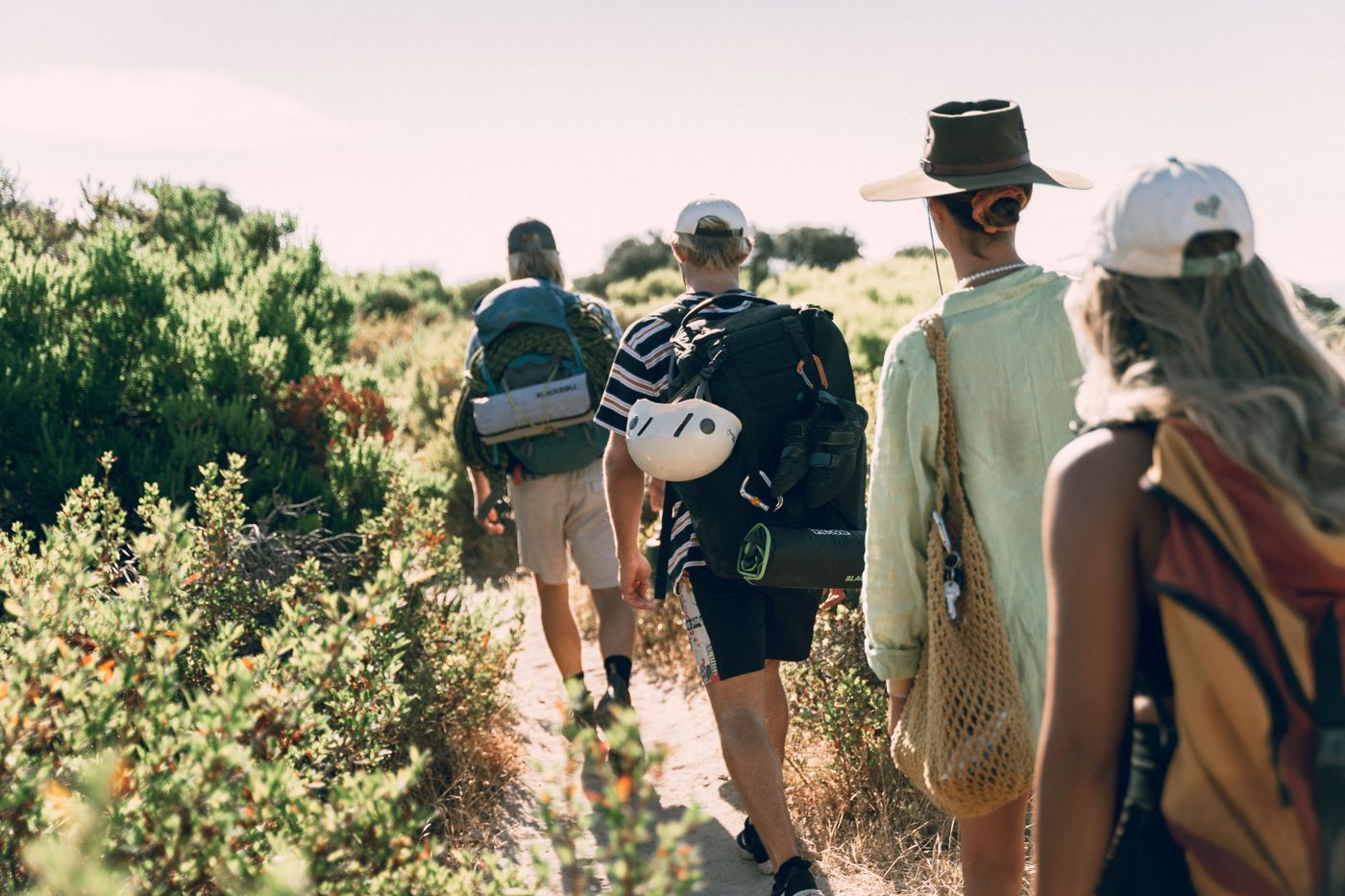
Best Backpacking Backpacks 2026 — 50L to 70L Picks buyers have more options than ever. A backpacking pack is the most personal piece of outdoor gear you'll buy — the fit between pack suspension and your torso length determines whether you carry 40 lbs comfortably or suffer through every mile. The right pack transfers most load to your hips (where your legs can carry it efficiently) and leaves shoulders providing balance rather than bearing weight. Volume selection follows trip length: 50–55L covers 3–5 day trips for most gear configurations, 60–70L handles 5–7+ day expeditions. We compared five packs across volume ranges and price points, prioritizing the suspension systems that actually make the difference between a good and a miserable multi-day trip.
| Pick | Award | Key spec | |
|---|---|---|---|
| Osprey Atmos AG 65 Backpack | Best Overall | — | Check price |
| Osprey Aura AG 65 (Women's) | Best for Women | — | Check price |
| Hyperlite Mountain Gear 3400 Southwest | Best Ultralight | — | Check price |
| REI Co-op Trail 40 Pack | Best Budget | — | Check price |
| Gregory Baltoro 65 Pack | Best for Heavy Loads | — | Check price |
The Osprey Atmos AG 65 has been voted the best backpacking pack across outdoor publications year after year because the Anti-Gravity suspension system genuinely delivers: the tensioned mesh panel floats the pack 2 inches off your back, allowing airflow that prevents the sweaty back panel of traditional packs, while the flexible frame conforms to your back's natural curve during movement rather than forcing your spine into the pack's predetermined shape. The result is a pack that gets more comfortable as you move, rather than wearing you down over miles. Torso-length adjustability with five settings covers most body types. Osprey's "All Mighty Guarantee" repairs or replaces the pack for any reason, ever — a true lifetime guarantee. For three-season backpacking trips of 3–7 days, the Atmos AG 65 is the safest choice for comfort.
The Osprey Aura AG 65 is the women's counterpart to the Atmos — identical Anti-Gravity suspension and lifetime guarantee, but designed around the anatomical differences of women's torsos: shorter average torso length options, narrower shoulder harness to match narrower shoulders, and curved hip belt cutouts that accommodate wider hips without the pressure points a men's hip belt creates. Women who have tried men's backpacking packs and found the hip belt uncomfortable, the shoulder straps too wide, or the torso fit incorrect often find the Aura solves all three problems immediately. If you're between men's and women's sizing, try both — the right fit matters more than the gender label on the pack.
The Hyperlite Mountain Gear 3400 Southwest is what serious long-distance backpackers and ultralight thru-hikers carry when pack weight is the primary optimization target. Dyneema Composite Fabric is 15 times stronger than steel by weight — the same material used in offshore racing boat hulls and cut-resistant gloves — making a pack that weighs 1 lb 14 oz and will outlast packs three times heavier. The fully waterproof design eliminates rain covers and wet gear worries in sustained precipitation. The suspension is minimal (padded hipbelt but no framesheet) which means weight savings but also that it loads best with a well-organized gear setup and some experience with frameless packs. On a PCT or AT thru-hike where pack weight is tracked obsessively, the HMG 3400 Southwest is the tool experienced distance hikers choose.
The REI Co-op Trail 40 is the right first backpacking pack — at $119 it's accessible enough to invest in before knowing if you'll backpack regularly, functional enough for 2–4 day trips with careful gear selection, and REI's member return policy allows return if it doesn't work for your body. The torso adjustment handles most body types, the front-load panel allows mid-pack access without unpacking everything, and the integrated rain cover (often sold separately on pricier packs) is practical for unexpected weather. For new backpackers who want to try the sport without committing $290 to an Osprey Atmos before knowing if they'll like it, the REI Trail 40 is the intelligent starting point.
The Gregory Baltoro 65 is the heavy-load specialist — Response AFS (Autoflex Suspension) is designed for packs loaded with 40–60+ lbs, the weight range of multi-week wilderness expeditions, mountaineering approaches, and winter camping where gear is heavy. The Auto-Cant hip belt pivots to match each leg's stride independently, reducing the hip friction that causes pain during extended carries of heavy loads. At light loads (under 30 lbs) the Atmos AG is more comfortable; at heavy loads (40+ lbs), the Baltoro's stiffer, more structured suspension transfers weight more efficiently. For serious expedition backpackers, mountaineers carrying rope and technical gear, and winter campers with heavy sleeping systems, the Baltoro is the right tool.
| Pack | Volume | Pack Weight | Best For |
|---|---|---|---|
| Osprey Atmos AG 65 | 65L | 5 lb 1 oz | Best overall comfort |
| Osprey Aura AG 65 | 65L | 4 lb 12 oz | Women's fit |
| HMG 3400 Southwest | 55L | 1 lb 14 oz | Ultralight / thru-hiking |
| REI Co-op Trail 40 | 40L | 3 lb 4 oz | Budget / beginners |
| Gregory Baltoro 65 | 65L | 5 lb 9 oz | Heavy loads / expedition |
Volume selection follows trip length. 30–40L: 1–3 day trips or ultralight extended trips. 50–60L: standard 3–5 day trips for most backpackers. 65–75L: 5–7+ day trips, winter camping with bulky gear, or group trips carrying shared equipment. A 65L pack is the standard all-purpose choice because it handles 3–7 day trips depending on how efficiently you pack. Under-packing into a too-small pack means compression straps fully maxed, poor weight distribution, and uncomfortable carries. Over-packing into a too-large pack means awkward empty space and temptation to fill it with unnecessary gear.
A poorly fitting $300 Osprey is more miserable to carry than a well-fitting $120 REI. Torso length (measured from the C7 vertebra at the base of your neck to the top of your hip bones) determines which size range to buy — most brands offer S/M/L or XS/S/M/L torso sizes, and getting this wrong means the hip belt either doesn't contact your hips (leaving all load on shoulders) or sits too low (losing hip transfer entirely). Get measured at an outdoor retailer if possible. Load the pack with 20–30 lbs in-store and walk around — a well-fitting pack should feel like the weight is riding your hips, not hanging from your shoulders.
The traditional guideline is pack weight no more than 20–25% of body weight — for a 160 lb person, 32–40 lbs loaded. Modern lightweight backpacking practice targets lower: sub-20 lbs loaded ("lightweight"), sub-10 lbs ("ultralight"). A practical 3-day summer backpacking kit for most people runs 25–35 lbs with food and water. If your loaded pack exceeds 40 lbs, evaluate gear choices before adding more volume — heavy packs cause knee and hip stress that compounds over mileage. The lightest pack isn't always the most enjoyable — the right balance is the lightest kit that meets your comfort and safety requirements for the specific trip.
Yes — most backpacking pack materials are water-resistant but not waterproof. Sustained rain will eventually soak through seams and fabric. Options: integrated rain cover (some packs like REI Trail 40 include one), separate pack rain cover ($20–40, available for most pack sizes), or pack liner (a large heavy-duty trash compactor bag placed inside the pack to keep contents dry regardless of external wetness). The pack liner approach is lightest and most reliable — external rain covers can blow off in wind and don't cover the hip belt or pockets. Most long-distance hikers use an internal liner rather than a rain cover.
See also: Best Backpacking Gear • Best Sleeping Pads • Best Camping Stoves • Best Hiking Sandals
The best backpacking backpacks 2026 — 50l to 70l picks balance performance, value, and durability. Our top picks cover a range of budgets and use cases — see the full comparison above for our ranked recommendations.
Backpacking Backpacks 2026 — 50L to 70L Picks range in price from $290 at the budget end to $340 for premium options. The best value is usually somewhere in the middle — see our picks above for specific price breakpoints.
Volume selection follows trip length. 30–40L: 1–3 day trips or ultralight extended trips. 50–60L: standard 3–5 day trips for most backpackers. 65–75L: 5–7+ day trips, winter camping with bulky gear, o
For most first-time buyers, we recommend starting with a mid-range option rather than going straight to the most expensive backpacking backpacks 2026 — 50l to 70l picks. Osprey Atmos AG 65 Backpack is a solid starting point based on owner reviews and published specs.
Yes — quality backpacking backpacks 2026 — 50l to 70l picks are worth the investment for anyone who uses them regularly. The key is matching the spec to how often and how hard you'll use them. Our picks above flag the best value at each price point so you're not overpaying.