
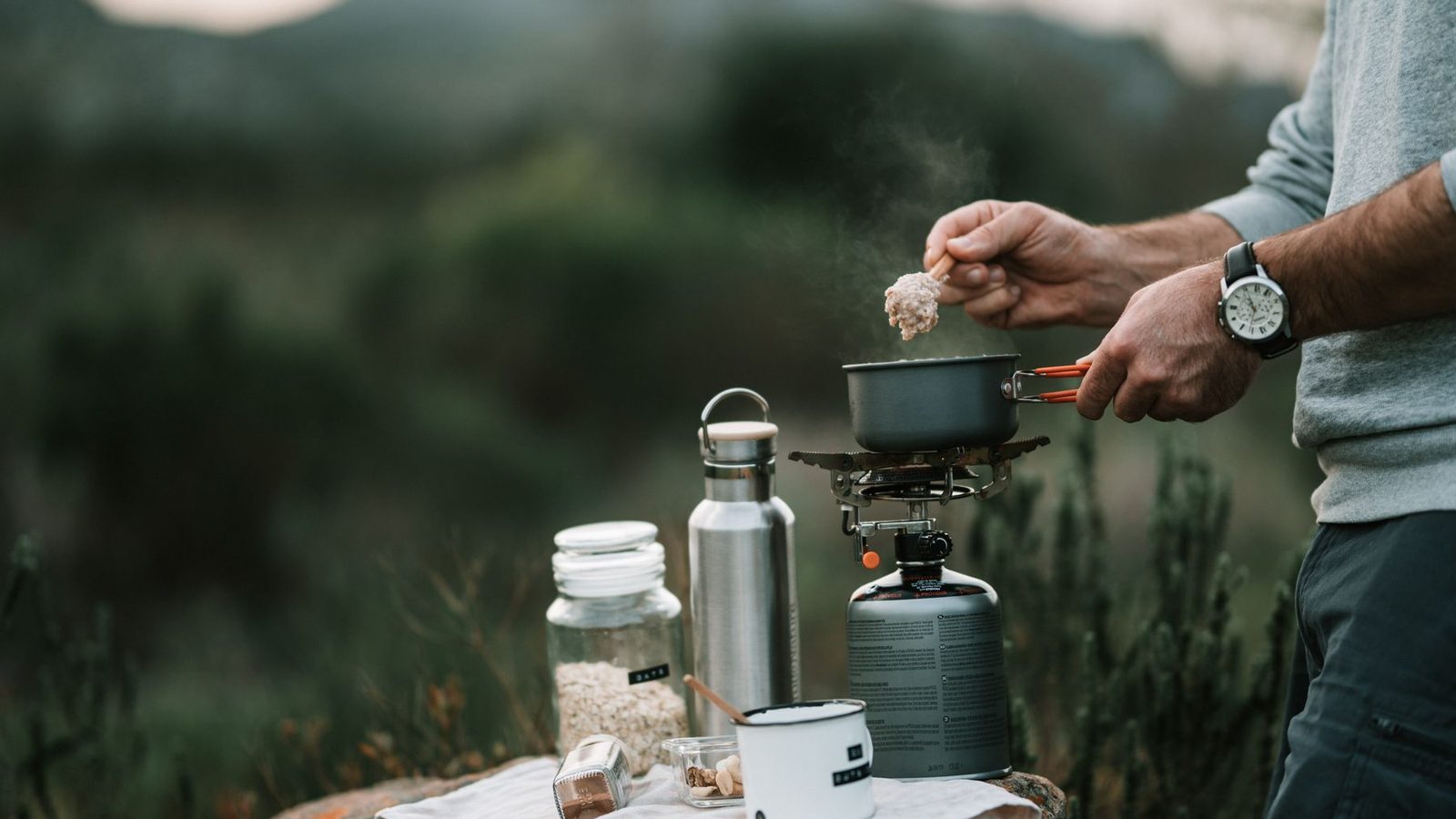
Best Camping Stoves 2026 — Backpacking & Car Camp Picks buyers have more options than ever. The camping stove category splits into two very different use cases: backpacking stoves (ultralight, canister-fed, minimal cooking capability, single-person efficiency) and car camping stoves (heavy, two-burner, propane-fed, full cooking capability for groups). The wrong stove for the wrong use case is an expensive mistake — a two-burner Coleman doesn't belong in a backpack, and a backpacking canister stove won't cook a family breakfast efficiently. We compared five stoves across both categories so you can match the stove to how you actually cook outdoors.
| Pick | Award | Key spec | |
|---|---|---|---|
| Jetboil Flash Cooking System | Best Backpacking Stove | — | Check price |
| Camp Chef Explorer Two-Burner Stove | Best Car Camping | — | Check price |
| MSR PocketRocket 2 | Best Ultralight | — | Check price |
| MSR Windburner Group Stove System | Best for Groups | — | Check price |
| Coleman Classic Propane Camp Stove | Best Budget Car Camping | — | Check price |
| Coleman Classic 2-Burner Propane Stove | Best Overall | — | Check price |
| Camp Chef Everest 2X High-Performance Stove | Best High-Output | — | Check price |
| MSR PocketRocket Deluxe | Best Ultralight Backpacking | — | Check price |
| Camp Chef Explorer 2-Burner Stove | Best for Large Groups | — | Check price |
| Primus Classic Trail Canister Stove | Best Budget | — | Check price |
The Jetboil Flash is the backpacking stove that optimized for the most common single-task backpackers need: boiling water fast and efficiently. The FluxRing technology (a heat exchanger integrated into the cup base) transfers heat 50% more efficiently than a standard pot on a standard stove, delivering the fastest boil times in its class. The integrated system — stove, cup, and neoprene insulation jacket in one unit — eliminates the compatibility questions between stove and cookware. The push-button piezo igniter works reliably down to about 15°F without a lighter. At $119 it's not cheap, but the speed advantage (100-second vs. 3–4 minute boil for budget systems) compounded over a multi-day trip adds up to meaningful time and fuel savings.
The Camp Chef Explorer is what serious car campers and overlanders cook on — 30,000 BTU per burner is significantly more powerful than home gas ranges (typically 9,000–15,000 BTU per burner) and enables cooking large meals for groups quickly. The real advantage is the accessory ecosystem: Camp Chef makes a cast iron griddle, a pizza oven attachment, and a barbecue box that convert the Explorer into a multi-cooking-method camp kitchen. Matchless ignition on both burners works reliably, sturdy windscreens protect the flame from wind, and the folding legs make setup and pack-down quick. At $139 it's double the Coleman but delivers double the BTU output and builds into a far more capable outdoor cooking setup.
The MSR PocketRocket 2 is the definition of a backpacking stove — 2.6 oz of stove that screws onto any standard isobutane/propane canister (MSR IsoPro, Jetboil, or generic) and boils water in 3.5 minutes. What the PocketRocket gives up to the Jetboil in speed and efficiency, it gains back in versatility — any pot works on it (not just the Jetboil cup), the simmer control is precise enough for real cooking (pasta, oatmeal, rehydrated meals that require sustained heat), and the $54 price is roughly half the Jetboil. For ultralight backpackers who weigh every ounce and want the flexibility to cook with different cookware, the PocketRocket 2 is the foundational stove choice.
The MSR Windburner Group is the Jetboil concept scaled up for groups — the 2.5L integrated pot handles cooking for 3–4 people, and the radiant burner technology maintains consistent performance in wind and cold that degrades standard canister stoves. Where a PocketRocket + titanium pot gives the solo or duo backpacker maximum versatility at minimum weight, the Windburner Group's sealed design eliminates wind as a cooking variable on exposed alpine campsites and in winter conditions. For families doing backpacking trips, groups splitting base camp weight loads, and winter campers where wind and cold are constants, the Windburner Group's weather resistance justifies the size and price premium.
The Coleman Classic has been the default family camping stove for decades because it does the job at a price almost anyone can absorb — $69 for a two-burner propane stove that cooks breakfast, heats coffee, and warms dinner for a family of four. The 10,000 BTU per burner output is half the Camp Chef Explorer's 30,000 BTU, which means longer cooking times and difficulty cooking multiple things simultaneously. For car campers who camp a few times a year and cook simple meals (eggs, hot dogs, pasta), the Coleman is adequate and costs half the Camp Chef. For more frequent campers or those who cook more ambitiously at camp, the Camp Chef investment pays off in cooking speed and capability.
| Stove | Type | Weight / BTU | Best For |
|---|---|---|---|
| Jetboil Flash | Backpacking | 13.1 oz system | Solo/duo speed boiling |
| Camp Chef Explorer | Car camping | 60,000 BTU total | Car camp group cooking |
| MSR PocketRocket 2 | Backpacking | 2.6 oz stove | Ultralight versatility |
| MSR Windburner Group | Backpacking | 15.5 oz system | Groups / wind/cold |
| Coleman Classic | Car camping | 20,000 BTU total | Budget car camping |
Canister stoves (isobutane/propane blend, like all five options above) are the right choice for most recreational backpackers — they're simple, clean, and reliable in three-season conditions. Liquid fuel stoves (white gas, like the MSR WhisperLite) are heavier and more complex but perform reliably in extreme cold (below 20°F) where canister pressure drops make canister stoves unreliable, and at high altitude. For summer and shoulder-season camping, canister stoves work perfectly. For winter mountaineering or high-altitude expeditions, liquid fuel is worth the complexity.
A standard 100g isobutane canister provides approximately 12 boils of 0.5L of water with a Jetboil Flash. For solo two-boil-per-day use (morning coffee/oatmeal, evening dinner), a 100g canister lasts 3 days. For a 5-day trip, carry a 230g canister or two 100g canisters. For two people with similar cooking needs, double the above estimates. These are conservative estimates — conservative because wind, altitude, and temperature all reduce fuel efficiency. Carry slightly more fuel than you think you need, especially in cold or windy conditions.
No — never use a camping stove inside a tent or any enclosed space. Carbon monoxide (CO) buildup from combustion is colorless, odorless, and lethal. Even "vestibule cooking" (in the tent's vestibule with the door partially open) carries significant CO risk. Cook outside, at least 6–10 feet from the tent. In rain, a tarp shelter over the cooking area — with fully open sides — is acceptable, but a closed or semi-enclosed space with a burning stove is dangerous regardless of conditions. CO poisoning is the leading cause of camping-related deaths in the US.
Propane (1-lb green canisters for Coleman stoves) works well at temperatures down to -44°F and has high BTU output but can't be used in standard screw-top canister backpacking stoves. Isobutane/propane blend (the silver screw-top canisters for Jetboil, MSR, etc.) is optimized for performance in cold weather where pure isobutane struggles — the propane component maintains pressure at lower temperatures. Above freezing, both work well. For three-season backpacking, any brand of isobutane/propane blend canister (MSR IsoPro, Jetboil Jetpower, or generic) works with screw-top stoves.
See also: Best Camping Headlamps • Best Family Camping Tents • Best Sleeping Pads • Camping Gear Hub
The best camping stoves 2026 — backpacking & car camp picks balance performance, value, and durability. Our top picks cover a range of budgets and use cases — see the full comparison above for our ranked recommendations.
Camping Stoves 2026 — Backpacking & Car Camp Picks range in price from $119 at the budget end to $69 for premium options. The best value is usually somewhere in the middle — see our picks above for specific price breakpoints.
Canister stoves (isobutane/propane blend, like all five options above) are the right choice for most recreational backpackers — they're simple, clean, and reliable in three-season conditions. Liquid f
For most first-time buyers, we recommend starting with a mid-range option rather than going straight to the most expensive camping stoves 2026 — backpacking & car camp picks. Jetboil Flash Cooking System is a solid starting point based on owner reviews and published specs.
Yes — quality camping stoves 2026 — backpacking & car camp picks are worth the investment for anyone who uses them regularly. The key is matching the spec to how often and how hard you'll use them. Our picks above flag the best value at each price point so you're not overpaying.