Mountain Biking for Beginners: Everything You Need to Get Started buyers have more options than ever. Mountain biking has a learning curve, but the early stages are genuinely fun even before you develop advanced technique. With the right bike fit, basic body position, and a beginner-appropriate trail, most people are having a great time within their first few rides.
Hardtail vs. full-suspension is the first decision. Hardtails (front suspension only) are lighter, simpler, less expensive, and better for learning technique — your legs and arms absorb what the rear wheel can't. Full-suspension bikes smooth out rough terrain but cost more and reward riders who already have skills to use that capability. For most beginners, a quality hardtail in the $700–1,400 range is the right starting point.
Helmet: a full-face helmet for technical trail riding; a lighter XC helmet for beginner cross-country trails. Gloves prevent road rash and improve grip. Flat-pedal shoes with stiff rubber soles grip platform pedals better than running shoes. Knee pads for any trail with rocks or drops — falls happen, and plastic knees are not better than $50 pads.
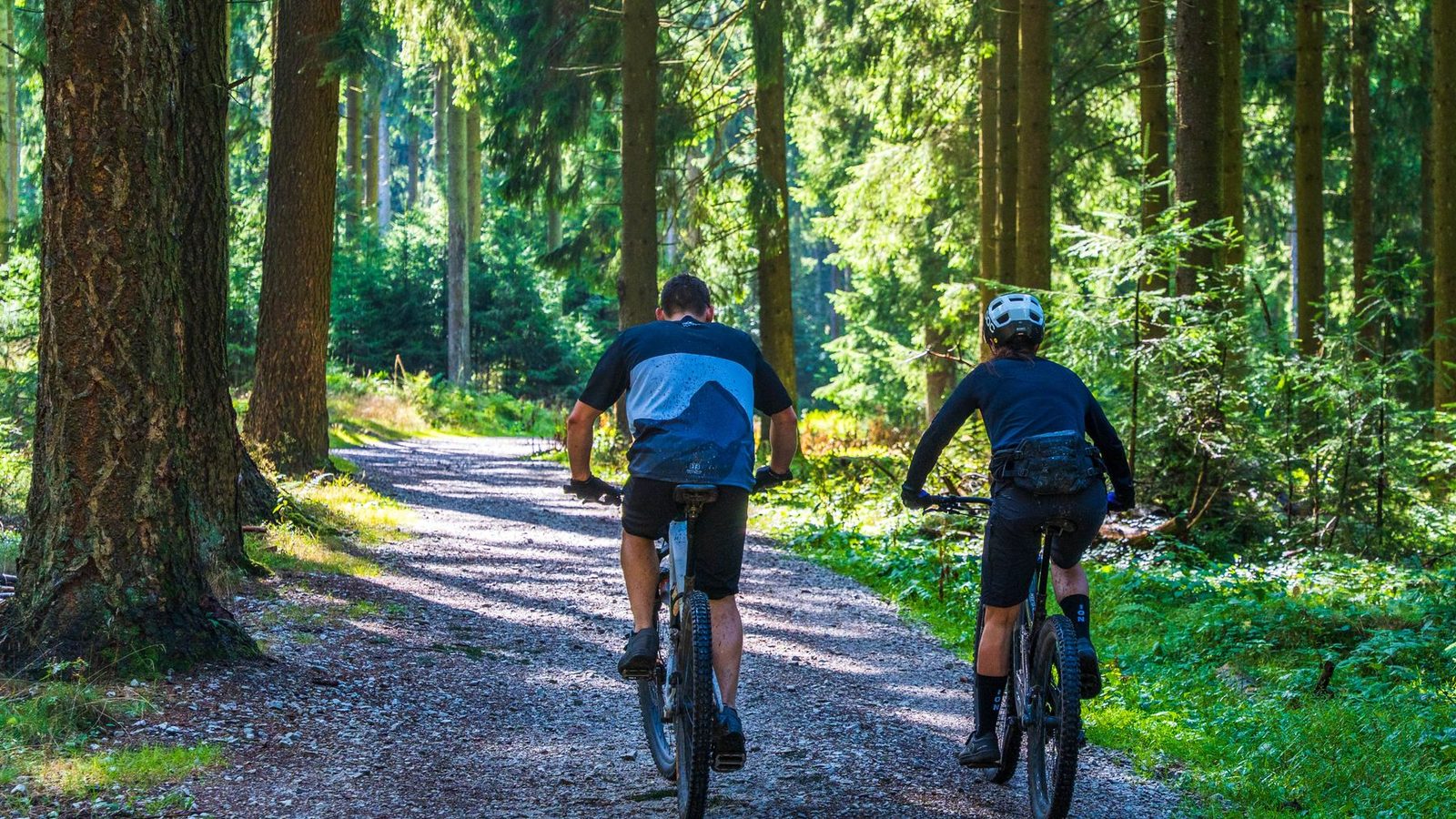
Neutral position: pedals level, slight bend in knees and elbows, chin up, weight centered. Attack position: lower, hips back behind the saddle, bent elbows acting as suspension, eyes looking ahead not at obstacles in front of your tire. Look where you want to go, not at what you're trying to avoid. The bike follows your eyes.
Most beginners over-brake. The front brake provides 70–80% of stopping power; the rear brake provides control. Use both brakes progressively, never jam them hard suddenly. Feather (lightly pulse) the brakes in corners and on loose terrain. Off the brakes entirely through rough sections lets the bike roll over obstacles rather than skidding.
Trailforks and MTB Project rate trail difficulty: green (beginner), blue (intermediate), black (advanced), double black (expert). Start on green trails even if you feel ready for blue — building confidence and technique at low stakes prevents the crashes that discourage beginners early. Ride green until it feels easy before graduating to blue.
$700–1,200 is the beginner quality threshold where frame geometry, component quality, and suspension performance are all adequate for real trail riding. Below $500, bikes from big box stores have low-quality parts that underperform and are frustrating to maintain. The Trek Marlin, Specialized Rockhopper, and Giant Talon are reliable beginner-to-intermediate hardtails in this range.
No — flat pedals with grip pins are preferred by many experienced mountain bikers. Flat pedals allow you to quickly put a foot down on technical terrain, which beginners need constantly. Learn on flats for at least 6 months. Clipless pedals may help efficiency for XC racing and long climbs, but they're not required for trail riding.
See also: Best Mountain Bikes for 2026 • Best Bike Helmets • Best Bike Lights
Mountain Biking for Beginners: Everything You Need to Get Started buyers have more options than ever. Mountain biking has a learning curve, but the early stages are genuinely fun even before you develop advanced technique. With the right bike fit, ba
For more on mountain biking for beginners: everything you need to get started, explore the related guides linked throughout this page. Each one goes deeper on specific aspects of the topic.
Choosing gear for mountain biking for beginners: everything you need to get started comes down to your budget, experience level, and how often you plan to use it. Our recommendations above are matched to different buyer profiles.