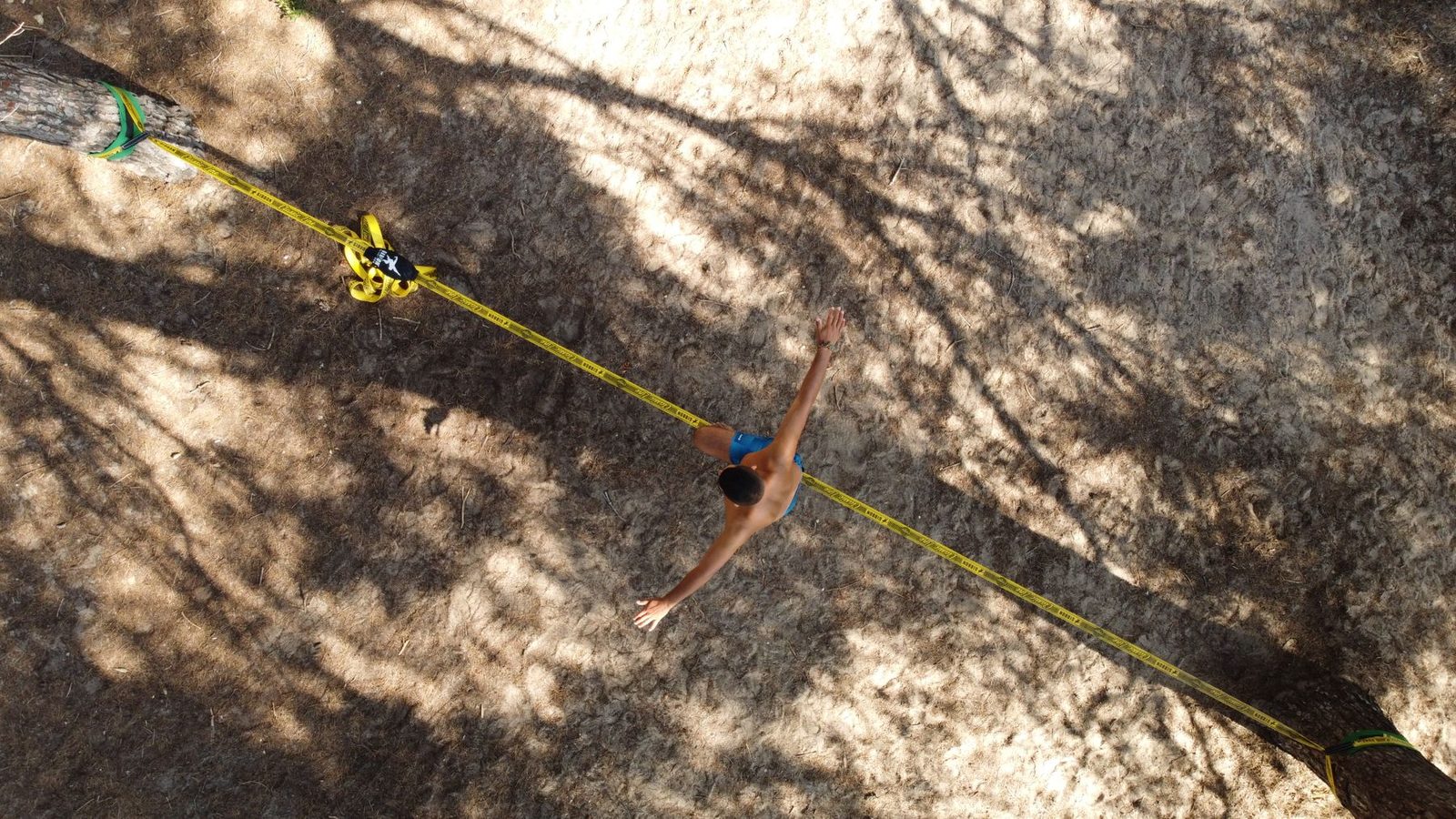
Best Slacklines 2026 — Beginner Kits, Yoga & Long Lines buyers have more options than ever. Slacklining is balancing and walking on a flat nylon webbing tensioned between two anchor points — most commonly trees in a park or backyard. It's equal parts balance training, outdoor recreation, and social activity, and requires no prior experience to get started. The learning curve from "can't stand on it" to "walking a 30-foot line" takes most people 3–8 practice sessions. Key variables: line width (wider = more stable for beginners), line length (shorter = easier), and tension system (ratchet vs. primitive vs. pulley). We compared five slackline kits from starter sets to longer adventure lines.
| Pick | Award | Key spec | |
|---|---|---|---|
| Gibbon Classic Line XL 49-Foot Kit | Best Overall | — | Check price |
| Slackers Classic Series Slackline Kit | Best for Kids | — | Check price |
| Gibbon Yoga Line XL 49-Foot Kit | Best Yoga | — | Check price |
| Landcruising Adventure Slackline 100-Foot Kit | Best Long Line | — | Check price |
| RAVE Sports Slackline Kit 57-Foot | Best Budget | — | Check price |
Gibbon invented the modern slackline kit — before Gibbon brought ratchet tensioning to the category, slackliners rigged primitive systems with carabiners and pulleys that required significant technical knowledge. The Classic Line XL is the starting point for virtually every new slackliner: 2-inch width provides a substantial platform for learning balance, the ratchet tensions and detensions the line in minutes, the tree protection pads prevent bark damage (required by most park regulations), and the 49-foot maximum length handles most park tree spacing. Gibbon's quality control and the brand's reputation in the slacklining community means their kits are the reference against which all others are measured.
The Slackers Classic is the family-friendly slackline kit that's made slacklining accessible to millions of backyard users — the included training rope (a secondary hand-hold line rigged alongside the slackline) is a genuinely useful learning aid for children who find freewalk balance too challenging in early sessions. The $49 price makes it the lowest barrier to entry for a quality kit, and a long track record count reflects widespread adoption. The Slackers' slightly narrower webbing and lower-quality ratchet are real tradeoffs vs. Gibbon at the budget end, but for families with children under 12 who want to add an activity to the backyard toolkit, the Slackers Classic delivers excellent value.
The Gibbon Yoga Line was purpose-designed for slacklining used as a balance and fitness tool rather than a walking/trick platform. The 3-inch webbing creates a substantial surface for yoga poses in a way the standard 2-inch line doesn't — standing yoga balances, seated poses, and even prone positions become achievable on the wider webbing. The line's dynamic quality (slight bounce under load) adds a proprioceptive challenge that makes yoga practice more demanding than on a yoga mat. For yoga practitioners, personal trainers, and balance athletes who want slacklining as a training modality rather than a recreational walk, the Yoga Line XL is the appropriate choice over the Classic.
Long-lining — walking slacklines of 60–200 feet or more — is the progression discipline that serious slackliners pursue after mastering shorter spans. At full length, a 100-foot line sags dramatically in the center and oscillates in waves that require active balance management completely different from the relatively static 30-foot lines beginners learn on. The Landcruising 100-foot kit includes a pulley system to achieve proper tension (a 100-foot line under appropriate walking tension requires mechanical advantage beyond what a single ratchet can deliver) and 5,000-lb rated webbing adequate for the dynamic loads of long-line walking. Not appropriate as a first slackline — best purchased by walkers who've completed a 50-foot beginner line and want to continue progressing.
The RAVE Sports kit is the entry point for buyers who want to try slacklining at the minimum possible investment — $39 is lower than any other kit on this list, and it works well enough for casual backyard use and introductory sessions. The tradeoffs vs. Gibbon are real: the ratchet hardware is lower quality, the webbing is narrower, and no tree protection pads are included (requiring separate purchase or DIY protection if used in a park). For buyers who are genuinely uncertain whether they'll continue slacklining after initial sessions, the $39 RAVE Sports kit is a reasonable risk-limited entry point; buyers who are committed to developing the skill will be better served by Gibbon's quality and durability from the start.
| Slackline | Width | Max Length | Best For |
|---|---|---|---|
| Gibbon Classic XL | 2" | 49 ft | Best overall |
| Slackers Classic | 1.75" | 50 ft | Kids / training rope |
| Gibbon Yoga XL | 3" | 49 ft | Yoga / fitness |
| Landcruising 100-ft | 2" | 100 ft | Long-lining / advanced |
| RAVE Sports | 1.75" | 57 ft | Budget entry |
Counter-intuitively, slacklines are not tight — they have significant sag. Beginners often overtighten, creating a line that bounces dramatically and is actually harder to walk than a properly tensioned line with controlled sag. The general guideline: for a 30-foot line, the center point should sag 8–18 inches below the anchor height when standing on it. This provides enough tension to walk without excessive oscillation while allowing the line to respond dynamically to body movement. Over-tensioned lines oscillate like guitar strings; under-tensioned lines feel like walking on a hammock. Most beginners find 12–15 inches of center sag on a 30-foot line to be the easiest walking tension. The ratchet click tension doesn't correspond to a specific sag — adjust by feel after initial tensioning.
Slackline webbing under tension concentrates significant pressure on tree bark — enough to damage the cambium (the living layer beneath bark) and potentially girdle a tree if left in place repeatedly. Most parks and campgrounds require tree protection as a condition of allowing slacklining. Dedicated tree protection pads (rubber or foam sleeves that wrap the tree at anchor points) are included with most premium kits; budget kits often omit them. DIY options include towels, carpet scraps, or pool noodles wrapped around anchor points and held in place by the line itself. Beyond bark protection, tree protection pads also extend webbing life by preventing abrasion from bark texture. Always remove slacklines after each session rather than leaving them rigged — even with protection, permanent rigging damages trees.
Most people can take their first steps on a slackline within the first session — the learning curve is immediate feedback. Walking a complete 30-foot line without touching the ground takes most beginners 3–8 practice sessions of 30–60 minutes each. Walking without needing to look at the line, turning around, and backwards walking take additional dedicated practice. The skill plateau many people hit after initial progress is usually resolved by shortening the line (20–25 feet is easier than 30–35 feet for early learners) and focusing on using a focal point on the ground rather than watching feet. Balance improvement from slacklining transfers meaningfully to surfing, skiing, snowboarding, and other balance-dependent sports — regular slacklining is used as cross-training by athletes in those disciplines.
Set the anchor points (where the line connects to trees) at approximately knee to hip height — the line will then sag to somewhere between ankle and knee height at the center. Lower anchors mean lower fall height (a genuine safety consideration for beginners), easier re-mounting after falling, and less psychological intimidation. High-tension highlining (rigged at heights where falls are serious) requires safety leashes, experienced anchoring, and technical rigging knowledge far beyond beginner kits. For backyard and park slacklining, keeping anchor points below 4 feet high keeps the center of the line at approximately calf height and ensures falls are onto soft ground from a manageable height.
See also: Best Spikeball Sets • Best Cornhole Sets • Best Bocce Ball Sets • Best Camping Hammocks
The best slacklines 2026 — beginner kits, yoga & long lines balance performance, value, and durability. Our top picks cover a range of budgets and use cases — see the full comparison above for our ranked recommendations.
Slacklines 2026 — Beginner Kits, Yoga & Long Lines range in price from $79 at the budget end to $39 for premium options. The best value is usually somewhere in the middle — see our picks above for specific price breakpoints.
Counter-intuitively, slacklines are not tight — they have significant sag. Beginners often overtighten, creating a line that bounces dramatically and is actually harder to walk than a properly tension
For most first-time buyers, we recommend starting with a mid-range option rather than going straight to the most expensive slacklines 2026 — beginner kits, yoga & long lines. Gibbon Classic Line XL 49-Foot Kit is a solid starting point based on owner reviews and published specs.
Yes — quality slacklines 2026 — beginner kits, yoga & long lines are worth the investment for anyone who uses them regularly. The key is matching the spec to how often and how hard you'll use them. Our picks above flag the best value at each price point so you're not overpaying.