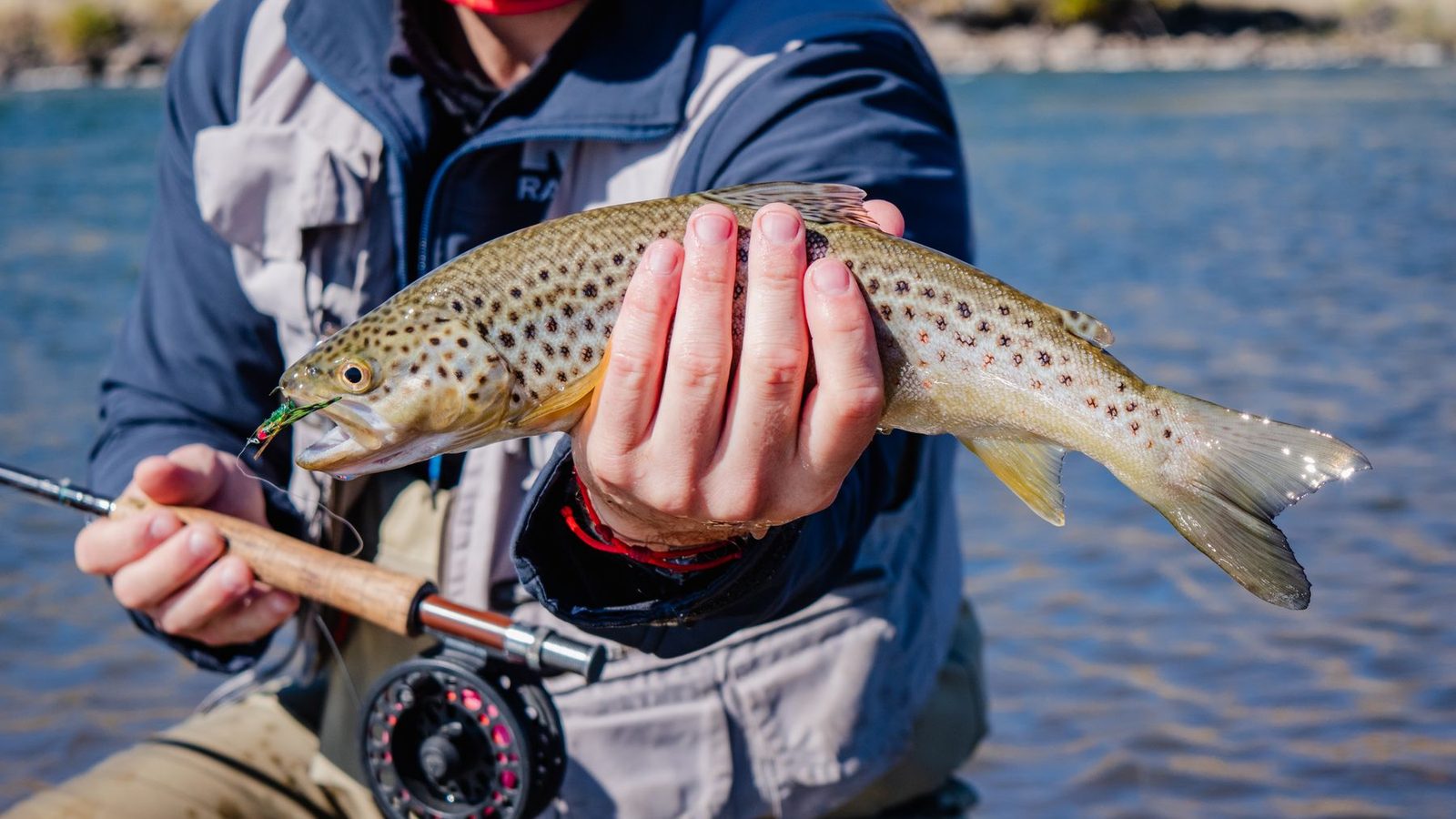
Best Fly Fishing Gear 2026 — Rods, Reels & Combos buyers have more options than ever. Fly fishing differs from conventional fishing in one fundamental way: you cast the weight of the line, not the lure. This requires specialized equipment — a fly rod designed to flex and load during the cast, a fly reel that balances the rod and manages the running line, and a tapered fly line that transfers energy from rod to fly. The upshot: you can deliver tiny, nearly weightless flies to fish with precision that conventional tackle can't match, making fly fishing the dominant technique for trout, salmon, and steelhead in moving water. We compared five setups from beginner combos to premium single-piece investments.
| Pick | Award | Key spec | |
|---|---|---|---|
| Orvis Clearwater 9' 5-Weight Outfit | Best Overall | — | Check price |
| Redington Path Outfit 9' 5-Weight | Best Budget | — | Check price |
| Sage Foundation 9' 5-Weight Outfit | Best Premium | — | Check price |
| Echo Base Kit 9' 5-Weight | Best for Beginners | — | Check price |
| Redington Topo Outfit 9' 5-Weight | Most Versatile | — | Check price |
The Orvis Clearwater is the outfit fly fishing instructors hand to new students most often — it loads well on short casts where beginners spend most of their time, tolerates the timing errors common in early casting practice, and comes with everything needed to hit the water including a pre-spooled reel with fly line, backing, and a tapered leader already attached. The 9-foot length and 5-weight designation is the universal starting configuration for trout fishing across all environments — small streams, freestone rivers, tailwaters, and stillwater lakes. Orvis's 25-year unconditional warranty is a genuine differentiator: any breakage, manufacturing defect, or accidental damage is replaced at no charge for 25 years, which covers the useful life of the rod for nearly all anglers.
The Redington Path is the answer for anglers who want to try fly fishing before committing Orvis-level money to the sport — at $149 complete, it's a genuinely functional outfit (not a toy), representing Redington's commitment to accessible fly fishing entry points. As an Orvis-owned brand, Redington has access to real manufacturing quality control, making the Path meaningfully better than the under-$100 off-brand combos that populate entry-level retail. The medium action and 9-foot length are appropriate for beginners; the tradeoff in rod quality (lower modulus graphite vs. the Clearwater's higher-end blank) becomes meaningful as casting skills develop, at which point upgrading to the Clearwater or a Sage is a natural next step.
Sage makes fly rods the way Leatherman makes multi-tools — American-manufactured, lifetime-warranted, and built to a standard that defines the category. The Foundation outfit is Sage's entry point into their lineup, pairing the fast-action graphite blank that experienced fly fishers prefer with the Spectrum C reel (a real large-arbor reel with a quality sealed drag) and premium Rio line. The fast action casts tight loops and reaches fish at distance with less effort than slower rods — an advantage for experienced anglers that becomes a disadvantage for beginners who haven't developed the casting timing to load a fast rod properly. Best purchased after a season on the Clearwater when the technique is solid and a step up in rod sensitivity becomes meaningful.
Echo is the value-focused fly fishing brand with a devoted following among guides who outfit clients who arrive without gear — the slow action forgives the most common beginner casting mistakes (starting the back-cast too early, not pausing long enough on the back-cast) that cause the line to collapse. For someone taking their first fly casting lesson or joining a guided trip on a trout stream, the Echo Base Kit provides the most accommodating casting experience in this price range. The tradeoff is growth ceiling — as casting improves and anglers want to throw longer distances and tighter loops, the slow action becomes limiting rather than helpful, at which point upgrading to the Clearwater or Sage is the natural progression.
The Redington Topo occupies the middle ground between the budget Path and the Orvis Clearwater — faster action handles larger rivers and windier conditions than the Path, and the included Zero reel is a genuine large-arbor reel with a quality drag system rather than the basic arbor reel in the Path kit. For anglers who've done their research and know they'll be fishing bigger water with wind, the Topo's faster action is the right choice over the Path. The $199 price makes it a reasonable consideration, though we'd nudge most buyers toward the Clearwater at $249 for Orvis's 25-year warranty — an assurance that changes the calculus on equipment investment significantly.
| Outfit | Action | Best For |
|---|---|---|
| Orvis Clearwater | Medium-fast | Best overall / 25-yr warranty |
| Redington Path | Medium | Budget complete kit |
| Sage Foundation | Fast | Premium / experienced casters |
| Echo Base Kit | Slow-medium | Most forgiving for beginners |
| Redington Topo | Medium-fast | Larger rivers / windy conditions |
Fly rod "weight" refers to the line weight the rod is designed to cast — it's matched to the size of fish and flies you're targeting. 1–3 weight: ultra-light setups for small streams, pan fish, and tiny dry flies. 4–6 weight: the trout and general freshwater range — 5-weight is the default "first rod" recommendation for its versatility across trout streams, lakes, and small bass water. 7–8 weight: bass, saltwater flats species (redfish, bonefish), light salmon/steelhead. 9–12 weight: large saltwater species (tarpon, permit, GT), big salmon, and pike. For first-time buyers: 9-foot 5-weight is the recommendation that covers the widest range of freshwater situations in the U.S. If you know you'll primarily fish small mountain streams with dry flies, a 4-weight is a more specialized choice; if you're targeting bass or fishing large tailwaters, consider a 6-weight.
Fly lines are matched to rod weight (a 5-weight rod takes a 5-weight line) and configured for different fishing presentations. Weight Forward (WF): the most common configuration — heavier mass in the first 30 feet helps load the rod quickly; best for most beginners and general fishing. Double Taper (DT): same diameter throughout the working portion; rolls over more delicately for dry fly presentation; favored by experienced anglers fishing small streams. Sinking lines: tungsten-coated lines that sink at controlled rates for streamer fishing in deep rivers; designated by sink rate (Type 3, Type 6, etc.). Floating lines are the default for trout fishing — most beginners should buy a floating WF line. The Rio Mainstream and Scientific Anglers Trout lines included with most outfit combos are appropriate for beginners; as fishing becomes more specialized, upgrading to a premium line like the Rio Gold or Cortland 444 is a meaningful performance improvement.
Yes, but a half-day lesson accelerates the learning curve substantially. The casting mechanics (back-cast, pause, forward-cast, loop formation) are learnable from YouTube videos and practice in a park with a yarn fly, but a certified instructor can identify and correct specific faults in your stroke that videos can't diagnose. Most fly shops offer beginner lessons for $75–150 and provide equipment — a worthwhile investment before purchasing gear, as the instructor will confirm the right weight and action for your local water. The Orvis fly fishing app and the FFI (Fly Fishers International) casting video library are the best free self-teaching resources available online.
Three flies cover most trout fishing situations for beginners: (1) Elk Hair Caddis size 14 — buoyant, visible, and imitates the most common trout stream insect; (2) Pheasant Tail Nymph size 14-16 — subsurface fly that catches fish when they're not rising to the surface (which is most of the time); (3) Woolly Bugger size 6-8 — a streamer that imitates small fish and large aquatic invertebrates; particularly effective in larger rivers and for larger trout. Most local fly shops will recommend specific patterns for their local water — buying a dozen flies from a local shop alongside a report on current hatches is more valuable than generic internet fly selection advice.
See also: Fishing Gear Guide • Best Spinning Reels • Best Waders • Best Fishing Kayaks
The best fly fishing gear 2026 — rods, reels & combos balance performance, value, and durability. Our top picks cover a range of budgets and use cases — see the full comparison above for our ranked recommendations.
Fly Fishing Gear 2026 — Rods, Reels & Combos range in price from $249 at the budget end to $199 for premium options. The best value is usually somewhere in the middle — see our picks above for specific price breakpoints.
Fly rod "weight" refers to the line weight the rod is designed to cast — it's matched to the size of fish and flies you're targeting. 1–3 weight: ultra-light setups for small streams, pan fish, and ti
For most first-time buyers, we recommend starting with a mid-range option rather than going straight to the most expensive fly fishing gear 2026 — rods, reels & combos. Orvis Clearwater 9' 5-Weight Outfit is a solid starting point based on owner reviews and published specs.
Yes — quality fly fishing gear 2026 — rods, reels & combos are worth the investment for anyone who uses them regularly. The key is matching the spec to how often and how hard you'll use them. Our picks above flag the best value at each price point so you're not overpaying.