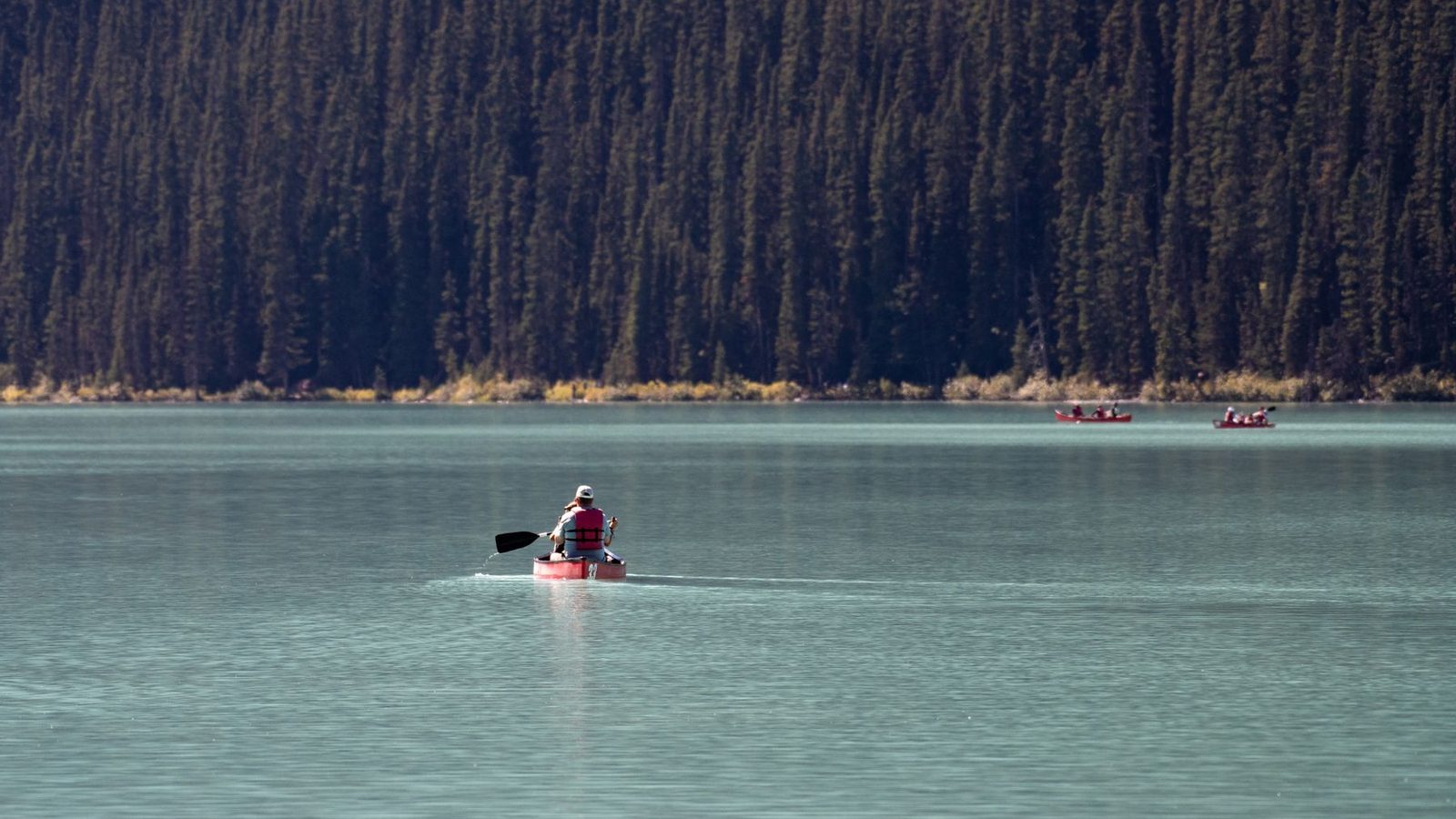
Best Canoes 2026 — Recreational, Tripping & Solo Picks buyers have more options than ever. Canoes offer something kayaks don't: an open deck that carries more gear, seats two paddlers comfortably side-by-side, and lets you haul camping equipment for multi-day lake or river trips without careful packing puzzles. They're slower to learn than kayaks but offer more versatility for family paddling and extended wilderness travel. We compared five canoes from a budget recreational option to a premium ultralight tripper.
| Pick | Award | Key spec | |
|---|---|---|---|
| Old Town Discovery 158 Canoe | Best Overall | — | Check price |
| Wenonah Spirit II Kevlar Canoe | Best for Tripping | — | Check price |
| Old Town Pack Canoe | Best Solo | — | Check price |
| Pelican Argo 100X Canoe | Best Budget | — | Check price |
| Grumman 17ft Aluminum Sport Canoe | Best Durability | — | Check price |
Old Town has been building canoes in Maine since 1898, and the Discovery 158 represents their approach to a durable all-around canoe. The three-layer polyethylene hull handles rocky rivers, beach launches, and years of use without cracking or fading — it's essentially impossible to break through normal use. The 15'8" length is long enough to track efficiently on open water while remaining manageable on smaller rivers. At 81 lbs it's heavy, but the weight reflects genuine material thickness and durability. For a family canoe that will last decades, the Discovery 158 is the benchmark.
Portaging — carrying a canoe overland between water bodies — is where canoe weight becomes critical. A 65-lb polyethylene canoe on a 2-mile portage in the Boundary Waters is brutal; the same portage with a 42-lb Kevlar canoe is manageable. Wenonah's Spirit II in Kevlar construction is the canoe serious trippers choose when they're doing multi-day wilderness routes with meaningful portage sections. The hull shape tracks efficiently on open water and turns responsively for tandem paddling. If you're doing Boundary Waters, Quetico, or similar expedition-style canoe camping, the weight savings justify the premium price.
Solo canoes exist in a niche between kayaks and tandem canoes — they're paddled with a single blade (like a canoe) but sized for one person. The Old Town Pack at 12 feet is short enough to handle easily solo, light enough at 33 lbs to car-top without help, and stable enough to use as a fishing platform on calm water. The open deck carries camera equipment, fishing gear, or a day's worth of supplies without the spray-skirt fuss of a kayak. For solo paddlers who prefer a canoe paddle to a kayak paddle and want a stable open-water platform, the Pack Canoe is the accessible entry point.
The Pelican Argo 100X brings canoe paddling within reach of families who aren't ready to invest $1,000+ in a first boat. At 10 feet, it's genuinely compact — fits easily on a car roof, stores in a garage without consuming the entire space, and handles calm lake paddling for two adults or an adult with two young children. RAM-X premium polyethylene is Pelican's proprietary material with good impact resistance and UV stability. For introducing kids to paddling, summer cottage use, or testing whether your family actually enjoys canoeing before investing in a serious boat, the Argo 100X is a sensible starting point.
Grumman aluminum canoes have been paddled since the 1940s and the design hasn't changed much because it doesn't need to. Thousands of these canoes survive decades of outfitter rental use, summer camp abuse, and wilderness river trips — aluminum dents rather than shatters, and dents don't sink boats. The 17-foot length is the standard all-around tandem canoe size, tracking efficiently and carrying significant gear. For families who want a canoe that will outlive everyone who paddles it, or anyone who wants the most reliable canoe possible for river use with rocks and logs, aluminum is the choice.
| Canoe | Length | Weight | Best For |
|---|---|---|---|
| Old Town Discovery 158 | 15'8" | 81 lbs | Best overall / durable |
| Wenonah Spirit II Kevlar | 17' | 42 lbs | Portage trips |
| Old Town Pack | 12' | 33 lbs | Solo paddling |
| Pelican Argo 100X | 10' | 50 lbs | Budget / beginner |
| Grumman 17ft Aluminum | 17' | 75 lbs | Maximum durability |
Canoes use a single-blade paddle, sit higher off the water, have an open cockpit for easy entry/exit and gear access, and typically carry two people. Kayaks use a double-blade paddle, sit lower for efficiency and speed, have a closed or semi-closed cockpit, and are typically faster. Canoes excel at family paddling, gear-heavy camping trips, and fishing. Kayaks excel at solo touring, ocean or roughwater paddling, and distance efficiency. Neither is strictly better — choose based on how you plan to use it.
Polyethylene is heavy (65–85 lbs) but affordable and virtually indestructible for normal use. Kevlar is light (38–52 lbs) but expensive — the weight savings matter most for portaging. Aluminum is heavy like poly but extremely durable and resistant to UV degradation — the traditional outfitter choice. Fiberglass sits between polyethylene and Kevlar in both weight and price. For most recreational use, polyethylene is the practical choice. For serious tripping with portages, Kevlar pays off.
Longer canoes (17–18 ft) track straighter and carry more capacity — better for tandem paddling on open water and multi-day trips. Shorter canoes (12–14 ft) turn more easily and are lighter — better for rivers with obstacles and solo paddling. For two adult paddlers on lakes and slow rivers, 16–17 feet is the standard recommendation. For solo use, 12–14 feet is optimal.
Basic canoeing on calm water is accessible to beginners within one outing. The main skill to learn is the J-stroke, which allows the stern paddler to keep the canoe tracking straight without switching paddle sides constantly. Calm lakes and slow rivers are appropriate for beginners. Moving water with rapids, ocean paddling, and windy open water crossings require training and experience before attempting.
Most canoes are transported on roof racks with foam blocks or J-cradles. Two foam block pads placed on the roof rails with the canoe strapped down with cam straps work for occasional use. J-cradles hold the canoe on its side and allow a wider canoe to fit between roof rack towers more securely. For solo car-topping, a canoe roller or loading assist arm makes the process much easier — 70+ lb canoes are awkward to lift alone.
Canoe paddles are single-bladed — one blade on one end, a T-grip or palm grip on the other. Paddle length depends on your height and seated height; a rough guide is that the paddle tip should reach your nose when the grip is on the floor. Blade material ranges from plastic (affordable, heavy) to fiberglass (mid-range) to carbon fiber (light, expensive). For most recreational use, a fiberglass blade provides the right balance of performance and price at $80–150.
See also: Best Kayaks • Best Kayak Paddles • Best Life Jackets • Water Sports Hub
The best canoes 2026 — recreational, tripping & solo picks balance performance, value, and durability. Our top picks cover a range of budgets and use cases — see the full comparison above for our ranked recommendations.
Canoes 2026 — Recreational, Tripping & Solo Picks range in price from $1,199 at the budget end to $1,899 for premium options. The best value is usually somewhere in the middle — see our picks above for specific price breakpoints.
Canoes use a single-blade paddle, sit higher off the water, have an open cockpit for easy entry/exit and gear access, and typically carry two people. Kayaks use a double-blade paddle, sit lower for ef
For most first-time buyers, we recommend starting with a mid-range option rather than going straight to the most expensive canoes 2026 — recreational, tripping & solo picks. Old Town Discovery 158 Canoe is a solid starting point based on owner reviews and published specs.
Yes — quality canoes 2026 — recreational, tripping & solo picks are worth the investment for anyone who uses them regularly. The key is matching the spec to how often and how hard you'll use them. Our picks above flag the best value at each price point so you're not overpaying.