
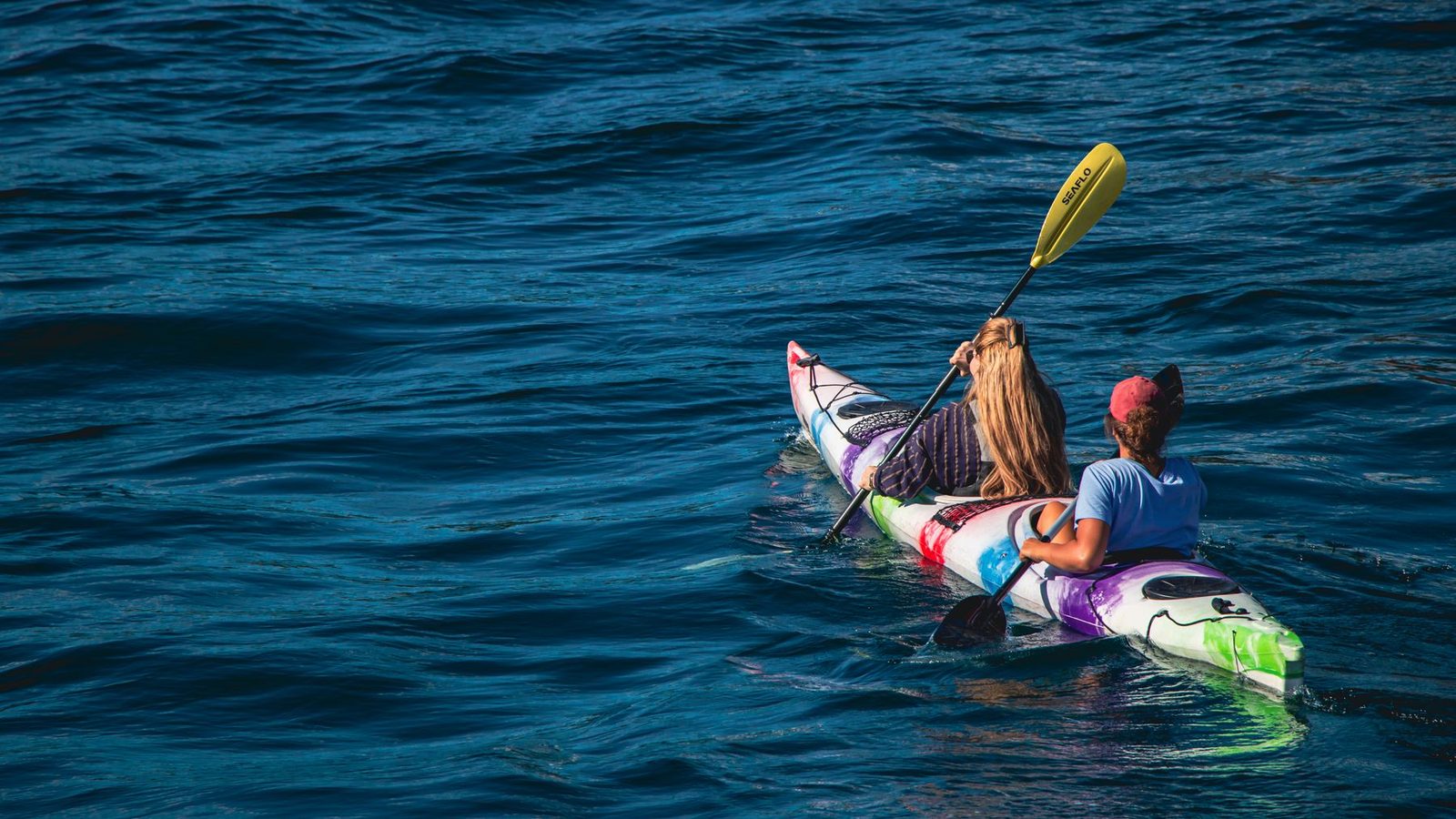
Best Kayak Paddles 2026 — Recreational & Touring Picks buyers have more options than ever. A kayak paddle is the sole connection between you and the water — its weight, blade design, and shaft material determine how efficiently you move, how your shoulders feel after four hours, and whether you're fighting the paddle or flowing with it. Paddle weight matters more than most beginners expect: a 2-lb aluminum paddle swung 2,000 times per hour on a day trip is meaningfully more tiring than a 20-oz carbon fiber paddle. We compared five paddles from beginner aluminum to touring carbon across price points to help you match paddle performance to how you actually paddle.
| Pick | Award | Key spec | |
|---|---|---|---|
| Aqua-Bound Manta Ray Carbon 2-Piece Paddle | Best Overall | — | Check price |
| Werner Camano Carbon Paddle | Best Touring | — | Check price |
| Carlisle Magic Plus Aluminum Kayak Paddle | Best Budget | — | Check price |
| Werner Skagit FG Fiberglass Paddle | Best Fiberglass | — | Check price |
| Aqua Marina Carbon Adjustable Paddle (SUP) | Best for SUP | — | Check price |
The Aqua-Bound Manta Ray Carbon hits the price point where a carbon shaft becomes accessible — $199 for a carbon fiber shaft with fiberglass blades, weighing 27.5 oz, which is substantially lighter than the 30–35 oz of aluminum alternatives. On a half-day paddle, that 3–7 oz reduction is nearly imperceptible. On a full day of 6+ hours, the shoulder and wrist fatigue difference is real and noticeable. The fiberglass blade (not full carbon like Werner's premium options) provides good blade stiffness and catch without the flex of plastic. The posi-lok ferrule allows 15° incremental feather adjustment from 0–60°. For recreational paddlers who paddle regularly and are ready to move past a beginner aluminum paddle without paying Werner Camano prices, the Manta Ray Carbon is the obvious step.
Werner paddles are the reference standard for serious sea kayakers and touring paddlers — the carbon construction is full-carbon blade and shaft, the asymmetric blade design (shorter on one side) reduces the flutter that causes inefficient strokes and wrist fatigue over long distances, and the mid-size blade area works efficiently at touring pace without requiring the high cadence of smaller blades or the brute force of large blades. At 25.9 oz the Camano Carbon is lighter than any fiberglass alternative. For paddlers doing multi-day sea kayaking trips, extended touring, and regular half-day paddles, the Werner Camano is the investment that pays off in reduced fatigue over thousands of hours of paddling.
The Carlisle Magic Plus is the paddle new kayakers buy with their first boat — $59, durable, and functional for learning to paddle on calm lakes and flatwater. The aluminum shaft and polypropylene blades are heavier than any fiberglass or carbon option, which matters over a full day but is irrelevant for a 1–2 hour recreational paddle. For families where multiple people share one kayak and one paddle, rental situations, and casual recreational paddlers who go out occasionally, the Carlisle does the job adequately. If you paddle more than 5–6 hours per season and care about performance, the upgrade to fiberglass (Werner Skagit) or entry carbon (Aqua-Bound Manta Ray) is worth the cost.
The Werner Skagit FG is the fiberglass step-up from aluminum for recreational paddlers who want Werner quality without the $320 Camano price. The fiberglass shaft and blade construction sheds weight compared to aluminum and adds blade stiffness for more efficient power transfer. Werner's dihedral blade ridge reduces flutter for cleaner strokes. At 29 oz it's lighter than aluminum but heavier than carbon — the natural middle position for paddlers who paddle regularly but aren't ready to invest in full carbon. Werner's reputation for build quality and durability at this price point is excellent; the Skagit typically outlasts cheaper alternatives by several seasons.
The Aqua Marina Carbon is designed for stand-up paddleboard use — the adjustable length accommodates different paddler heights (SUP paddle length is determined by height + 6–10 inches), the T-bar grip is the proper SUP paddle grip style, and the blade angle is optimized for the SUP forward stroke. For families or couples where one board gets used by multiple different-height paddlers, the adjustable length is essential. If you have a kayak and a SUP and want one paddle for both, an adjustable SUP paddle can double as a kayak paddle with the right adapter, though dedicated kayak paddles are preferable for regular kayaking. This is the right purchase if SUP is your primary use.
| Paddle | Material | Weight | Best For |
|---|---|---|---|
| Aqua-Bound Manta Ray Carbon | Carbon shaft / FG blade | 27.5 oz | Best overall / step-up |
| Werner Camano Carbon | Full carbon | 25.9 oz | Touring / serious paddlers |
| Carlisle Magic Plus | Aluminum / poly | 35+ oz | Budget / beginners |
| Werner Skagit FG | Fiberglass | 29 oz | Mid-range recreational |
| Aqua Marina Carbon SUP | Carbon (adjustable) | ~25 oz | SUP / multi-user |
Kayak paddle length is determined by two factors: your torso height (not total height) and your kayak's width. Wider kayaks (recreational sit-on-tops, fishing kayaks) require longer paddles — typically 230–240cm for recreational use. Narrower touring kayaks use shorter paddles — 210–220cm for most adults in a 22–24 inch wide boat. Taller paddlers with longer torsos move up by 5–10cm. Paddle manufacturers publish sizing charts — measure your kayak width and torso height (seated, from seat to chin) and use the chart. An undersized paddle forces a cramped stroke; an oversized paddle hits the deck of the boat.
Feathering refers to the offset angle between the two blades. Unfeathered (0°) means both blades are aligned — simpler for beginners. Feathered (typically 30–60°) offsets the blades so the upper blade cuts through wind during the recovery phase, which reduces wind resistance during strong headwinds. Most recreational paddlers use 0° or minimal feather; touring paddlers in wind often prefer 30–45°. Most modern paddles like the Aqua-Bound Manta Ray allow adjustment via the ferrule — you can experiment with different feather angles to find what feels natural for your stroke style.
Yes — meaningfully so on longer paddles. A typical paddler takes 1,500–2,000 paddle strokes per mile. On a 6-mile day paddle, that's 9,000–12,000 strokes. Each stroke involves lifting the out-of-water blade — a 10-oz weight difference across 10,000+ repetitions is genuinely fatiguing. The shoulder and wrist difference between a 35 oz aluminum paddle and a 25 oz carbon paddle is noticeable by hour two and significant by hour four. For casual 1-hour recreational paddles, paddle weight is irrelevant. For half-day and full-day outings, it matters.
Kayak paddles have blades on both ends and are held with both hands in a symmetrical grip. Canoe paddles have a single blade on one end and a T-grip on the other — they're used one side at a time with a J-stroke to maintain direction. The two are not interchangeable. A double-blade kayak paddle can technically be used in an open canoe (sit-and-switch technique) but is awkward for traditional canoe paddling. If you have both a canoe and a kayak, you need both paddle types.
See also: Best Kayaks & Paddleboards • Best Canoes • Water Sports Hub • Best Camping Headlamps
The best kayak paddles 2026 — recreational & touring picks balance performance, value, and durability. Our top picks cover a range of budgets and use cases — see the full comparison above for our ranked recommendations.
Kayak Paddles 2026 — Recreational & Touring Picks range in price from $199 at the budget end to $89 for premium options. The best value is usually somewhere in the middle — see our picks above for specific price breakpoints.
Kayak paddle length is determined by two factors: your torso height (not total height) and your kayak's width. Wider kayaks (recreational sit-on-tops, fishing kayaks) require longer paddles — typicall
For most first-time buyers, we recommend starting with a mid-range option rather than going straight to the most expensive kayak paddles 2026 — recreational & touring picks. Aqua-Bound Manta Ray Carbon 2-Piece Paddle is a solid starting point based on owner reviews and published specs.
Yes — quality kayak paddles 2026 — recreational & touring picks are worth the investment for anyone who uses them regularly. The key is matching the spec to how often and how hard you'll use them. Our picks above flag the best value at each price point so you're not overpaying.