
Best Tennis Rackets 2026 — Beginner, Intermediate & Advanced Picks buyers have more options than ever. Picking the wrong tennis racket makes the game harder than it needs to be. Beginners need a large head size and light frame that generates power without requiring full swings. Advanced players want smaller heads with more control and less power assist. The brands — Wilson, Babolat, Head — all make excellent rackets across every level, which means the pick comes down to your current game and where you want it to go. We compared five rackets spanning the full skill range.
| Pick | Award | Key spec | |
|---|---|---|---|
| Wilson Clash 108 v2 | Best for Beginners | — | Check price |
| Babolat Pure Drive 100 | Best Intermediate | — | Check price |
| Head Prestige MP | Best for Control | — | Check price |
| Wilson Burn 25 Jr Tennis Racket | Best for Kids | — | Check price |
| Wilson Blade 98 v8 16x19 | Best All-Around | — | Check price |
Wilson's Clash series uses FreeFlex technology — a carbon fiber layup that bends more than traditional frames, absorbing shock and reducing the arm fatigue that makes beginners quit. The 108 square inch head is large enough that mishits still find the court, which keeps rallies going and makes the early learning process less frustrating. The light frame (10.2 oz strung) requires less swing effort to generate pace, compensating for the shorter, less efficient strokes beginners develop. As your technique improves, the Clash will feel too powerful — but that's the right problem to have when you're starting out.
The Babolat Pure Drive has been the bestselling tennis racket in the world for much of the past two decades — popular with club players, weekend warriors, and multiple tour professionals simultaneously. The 100 square inch head is the "Goldilocks" size for intermediate players: large enough to be forgiving of slight mishits, small enough to require and reward developing proper technique. The FSI string pattern and open spacing generates topspin naturally, which helps intermediate players develop the ball control that improves consistency. If you've been playing for 1–3 years and want to upgrade from a starter racket, the Pure Drive is the most proven choice.
The Head Prestige is the control player's racket — smaller head, heavier frame, tighter string pattern that rewards precise ball striking with exceptional shot placement. The trade-off is that it punishes less-than-perfect contact more than the Pure Drive or Wilson Clash. For advanced club players and competitive amateurs who have developed reliable technique and want a racket that responds precisely to where they intend to hit the ball, the Prestige MP is the benchmark. It's also the racket of choice for professional players who build their game on accuracy rather than power.
Children's tennis rackets are sized by length — 19", 21", 23", 25", and 26" correspond roughly to ages 4–5, 6–7, 8, 9–10, and 11–12 respectively, though height is more accurate than age for sizing. The Wilson Burn 25 at 25 inches is appropriate for most 9–11 year olds. Proper sizing matters because a racket too large for a child develops poor technique (grip, swing path) that's harder to fix later. Wilson's junior rackets use the same quality materials as their adult frames scaled appropriately. Don't make the common mistake of buying a 26" racket for an 8-year-old expecting them to grow into it — they'll develop bad habits in the meantime.
The Wilson Blade is the best all-around tennis racket for strong intermediate through advanced players who don't want to commit to the polarized choice between a power racket (Babolat Pure Drive) or a pure control racket (Head Prestige). The braided graphite layup provides a distinctive feel — firm enough for precision, flexible enough to absorb shock — and the 16x19 string pattern hits the spin-versus-control balance well for modern baseline play. Carlos Alcaraz's use of the Blade on tour demonstrates it's competitive at the highest level. For improving club players who want a single racket they won't outgrow, the Blade 98 is the answer.
| Racket | Head Size | Weight | Best For |
|---|---|---|---|
| Wilson Clash 108 v2 | 108 sq in | 10.2 oz | Beginners |
| Babolat Pure Drive 100 | 100 sq in | 10.6 oz | Intermediate |
| Head Prestige MP | 98 sq in | 11.6 oz | Control / advanced |
| Wilson Burn 25 Jr | Youth | 7.7 oz | Kids (ages 9–11) |
| Wilson Blade 98 v8 | 98 sq in | 11.2 oz | Best all-around |
Head size determines the sweet spot size and power level. Larger heads (105–115 sq in) have bigger sweet spots and generate more power with less effort — ideal for beginners. Midsize heads (95–100 sq in) balance power and control — right for intermediate players. Smaller heads (85–95 sq in) provide maximum control with less power assist — suited to advanced players with efficient technique. Beginners who buy a small-head racket will struggle more than necessary; advanced players who use oversized heads sacrifice the precision their technique has earned.
Heavier rackets (11+ oz) provide more stability and power-through-weight but require more physical effort to swing. Lighter rackets (under 10.5 oz) are easier to swing fast but provide less stability on off-center hits. Beginners and players with arm injuries typically benefit from lighter frames. Competitive and physical players tend to prefer heavier frames for the stability advantage. Most rackets come unstrung at 9–12 oz with string adding 0.5–0.8 oz.
Most rackets purchased on Amazon come pre-strung at a basic tension. For recreational play, the factory string job is adequate for getting started. For serious play, getting rackets strung by a professional stringer with a preferred string type and tension makes a meaningful difference in feel and performance. String tension affects power (lower tension = more power, higher = more control) and strings need replacing every 30–40 hours of play or when they lose elasticity.
Grip size is measured in circumference: sizes 1–5 (4⅛" to 4⅝") correspond roughly to hand size. A common field test: hold the racket in your dominant hand with a forehand grip. If you can fit the index finger of your non-dominant hand between your fingertips and palm, the grip is right. If there's too much space, size down; if you can't fit a finger, size up. Using the wrong grip size contributes to tennis elbow.
Frames (the graphite structure) last many years with normal play — damage from drops, fence contacts, or violent mishits is more likely to end a frame's life than normal use wear. Strings need replacing every 30–40 hours of play for recreational players (more often for competitive players) — "if you play 3 times per week, restring 3 times per year" is a useful rule of thumb. Grip tape should be replaced when it no longer feels tacky, typically every few months of regular play.
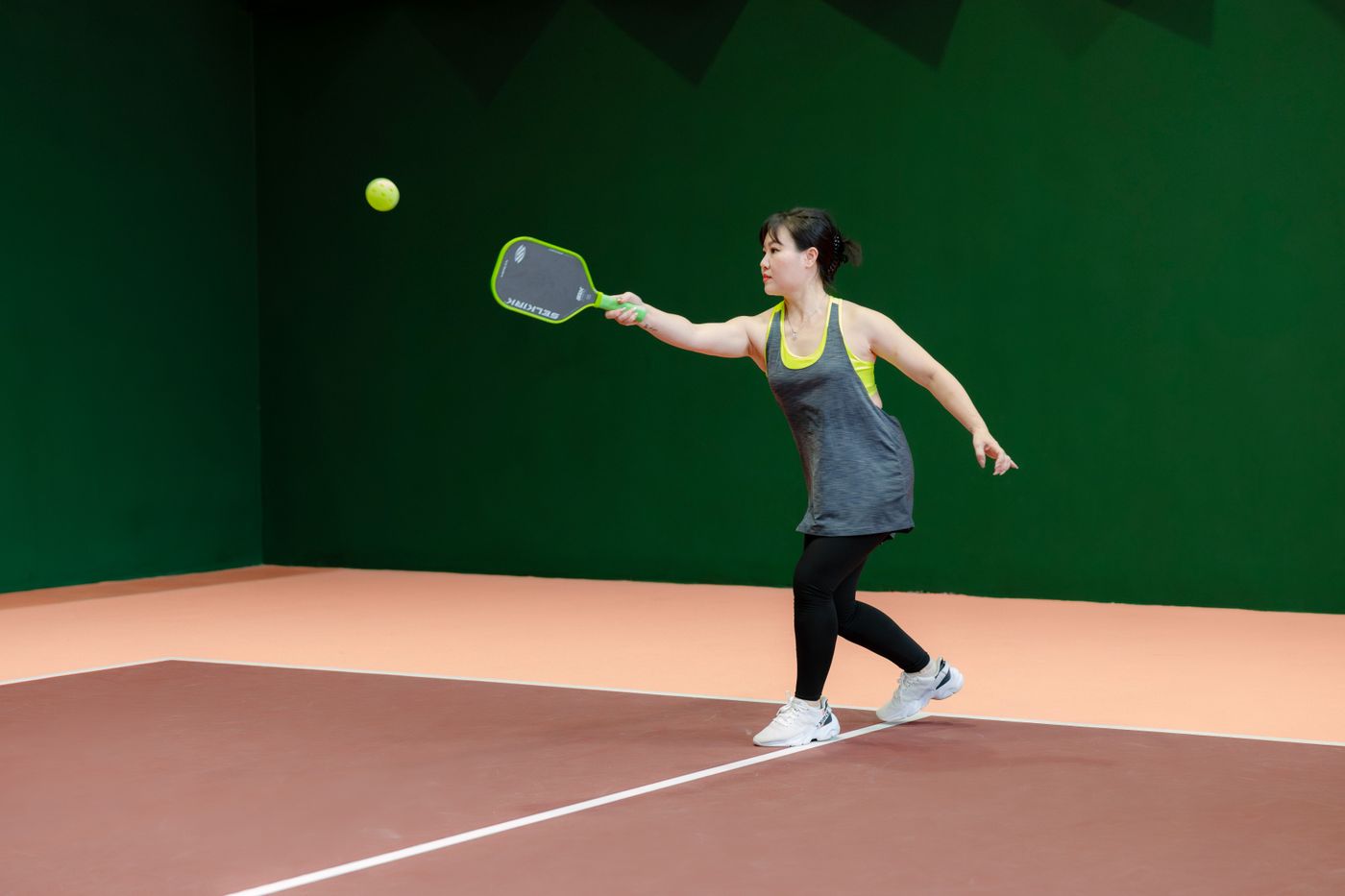
Yes. Pickleball uses a solid paddle (no strings) and a wiffle-style plastic ball on a smaller court. Tennis uses a strung racket and a pressurized felt ball on a larger court. The skills overlap somewhat, but the equipment is completely different. Players transitioning between sports need sport-specific equipment for each.
See also: Best Pickleball Paddles • Best Golf Drivers • Best Fitness Trackers
The best tennis rackets 2026 — beginner, intermediate & advanced picks balance performance, value, and durability. Our top picks cover a range of budgets and use cases — see the full comparison above for our ranked recommendations.
Prices for tennis rackets 2026 — beginner, intermediate & advanced picks vary widely depending on features and brand. Budget options start under $100 while premium models can run several hundred dollars or more. Our picks above cover the full range.
Head size determines the sweet spot size and power level. Larger heads (105–115 sq in) have bigger sweet spots and generate more power with less effort — ideal for beginners. Midsize heads (95–100 sq
For most first-time buyers, we recommend starting with a mid-range option rather than going straight to the most expensive tennis rackets 2026 — beginner, intermediate & advanced picks. Wilson Clash 108 v2 is a solid starting point based on owner reviews and published specs.
Yes — quality tennis rackets 2026 — beginner, intermediate & advanced picks are worth the investment for anyone who uses them regularly. The key is matching the spec to how often and how hard you'll use them. Our picks above flag the best value at each price point so you're not overpaying.