
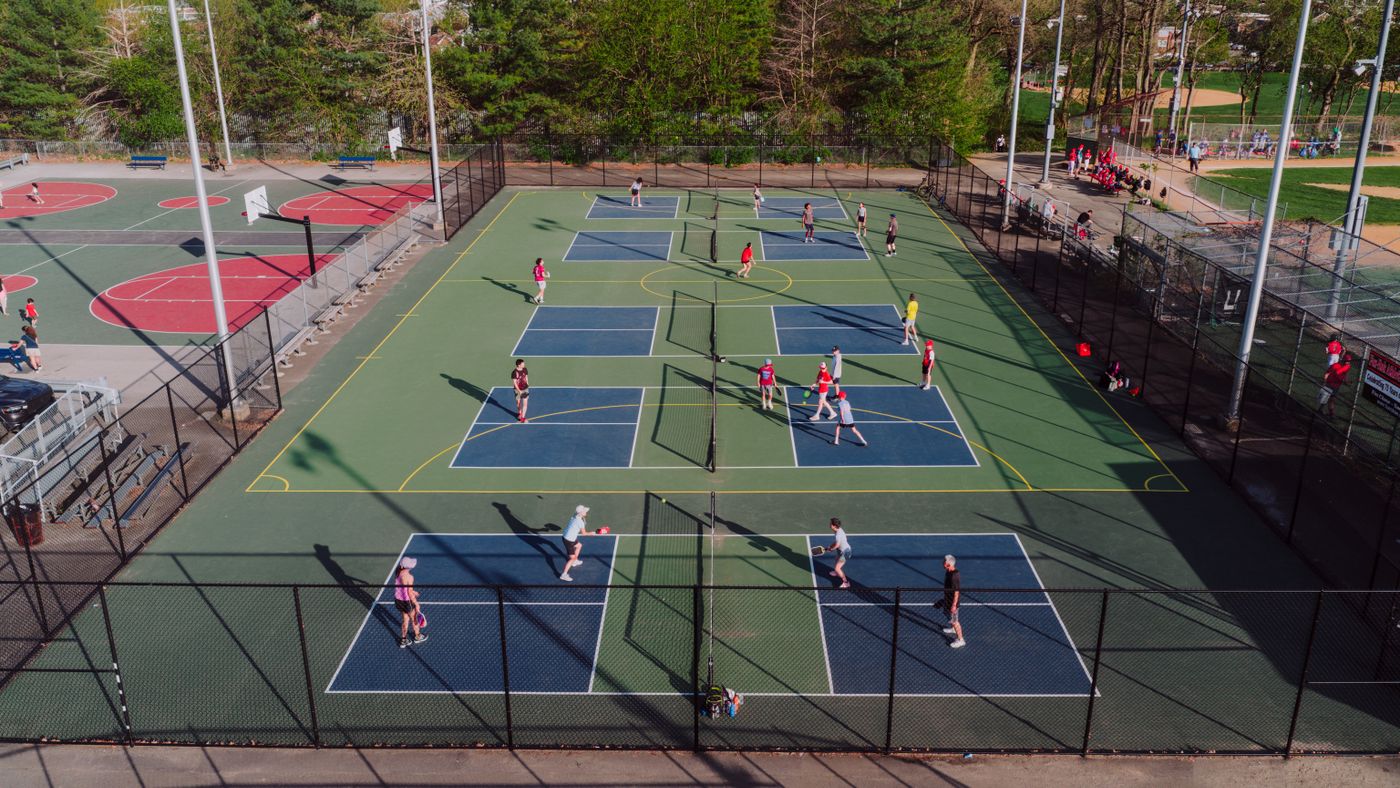
Best Pickleball Balls 2026 — Indoor & Outdoor Picks buyers have more options than ever. Indoor and outdoor pickleball balls are not interchangeable — they're designed for different court surfaces and conditions. Outdoor balls (harder plastic, 40 holes) handle wind, asphalt, and concrete surfaces; indoor balls (softer plastic, 26 larger holes) are optimized for smooth gymnasium floors and controlled air. Using an outdoor ball indoors produces a significantly different (typically worse) bounce and playing experience, and indoor balls on outdoor courts wear quickly on rough surfaces. We compared five balls across categories — the tournament-standard options used on professional tours, reliable recreational options, and value choices for beginners and casual play.
| Pick | Award | Key spec | |
|---|---|---|---|
| Dura Fast 40 Outdoor Pickleball | Best Outdoor | — | Check price |
| Onix Pure 2 Pickleball (Outdoor) | Best All-Around | — | Check price |
| Onix Fuse Indoor Pickleball | Best Indoor | — | Check price |
| Franklin X-40 Outdoor Pickleball | Best for Beginners | — | Check price |
| JOOLA Ben Johns Hyperion Pickleball | Best New Generation | — | Check price |
The Dura Fast 40 is the pickleball ball — the official ball at most major professional tournaments and the standard against which other outdoor balls are compared. Forty machine-drilled holes in hard polypropylene plastic produce consistent flight in wind and a reliable, predictable bounce on outdoor hard courts. Consistency between individual balls within a pack is the practical advantage — recreational play and tournaments need balls that play identically so player errors aren't attributable to ball variation. The faster, harder play style the Dura promotes suits intermediate and advanced players. For cold-weather outdoor play, buy fresh balls in cold temperatures as older Dura balls crack at the seam below 50°F.
The Onix Pure 2 is the ball that recreational players and club programs gravitate toward — slightly softer than the Dura Fast 40, which produces a slightly slower game that beginners and intermediate players find more manageable, with the same consistency and USA Pickleball approval as the tournament standard. The softer plastic is quieter on paddle contact, which matters for neighborhood courts and community center play where noise is a concern. Bounce consistency within a pack is excellent. For recreational clubs, open play sessions, and players who prefer a slightly slower ball without sacrificing quality, the Onix Pure 2 is the practical alternative to Dura's harder-playing standard.
The Onix Fuse is the standard indoor pickleball for gym and community center play — the 26 larger holes and softer plastic produce the appropriate flight and bounce for smooth gymnasium floors, slower-paced indoor play, and controlled recreational rallying. Using an outdoor ball (40 smaller holes, harder plastic) on an indoor gym floor creates a ball that bounces much higher and plays significantly faster than the indoor standard — most club coordinators and recreation center programs specify the Fuse or equivalent for indoor sessions. If you play exclusively indoors, the Fuse is the correct choice. If you play both, maintain separate balls for each environment.
The Franklin X-40 is the pragmatic recommendation for beginners — the most widely available outdoor pickleball, used at high-profile tournaments including the US Open, at the lowest price per ball. New players who are still learning proper swing mechanics shouldn't invest heavily in premium balls that they'll crack, lose, and dink into the net at roughly the same rate as budget options. The X-40 provides adequate consistency and durability for 3.0–4.0 level play. Once you're playing 3–4 times per week and care about ball performance, the upgrade to Dura Fast 40 or Onix Pure 2 is worthwhile. Until then, the X-40 covers the fundamentals.
The JOOLA Hyperion is the emerging challenger to Dura Fast 40's tournament dominance — designed with Ben Johns and engineered with Hyperion Polymide plastic that JOOLA claims maintains structural integrity at lower temperatures than Dura's polypropylene. Early tournament adoption is growing as competitive players at PPA events switch from Dura. The 40-hole pattern is identical in concept to Dura, and flight characteristics are similar. For competitive players who've had frustration with Dura cracking in cold-weather outdoor play, the Hyperion's cold-temperature durability claim is worth testing. For recreational players, either Dura or JOOLA provides equivalent performance at similar price — the choice often comes down to which is in stock at your local sporting goods store.
| Ball | Price/Ball | Holes | Court Type | Best For |
|---|---|---|---|---|
| Dura Fast 40 | $4–$5 | 40 | Outdoor | Tournament standard |
| Onix Pure 2 | $3–$4 | 40 | Outdoor | Recreational / softer play |
| Onix Fuse Indoor | $3–$4 | 26 | Indoor | Gym / community centers |
| Franklin X-40 | $2–$3 | 40 | Outdoor | Beginners / budget |
| JOOLA Ben Johns Hyperion | $4–$5 | 40 | Outdoor | Cold weather / competitive |
For casual recreational play: a pack of 6–12 balls is practical — you'll lose some over fences, crack some in cold weather, and want to have extras when playing with groups. Balls should be replaced when they crack (which causes unpredictable bounce), deform out of round (easily checked by rolling the ball across a flat surface), or soften noticeably (test by squeezing — a degraded ball feels softer than a new one). Typical lifespan for outdoor balls in regular use: 5–20 sessions depending on court surface roughness and temperature conditions. Indoor balls last longer due to smoother surfaces and controlled temperatures.
USA Pickleball allows any single solid color for approved balls. Yellow and white are the most common outdoor colors — yellow is the most visible on most outdoor court colors. Neon green, neon orange, and neon pink are popular for high-visibility against dark or asphalt court surfaces. Indoor balls are commonly white or yellow to contrast against gymnasium floors. The practical rule: choose whatever color is most visible on your specific court surface. Many recreational players keep a high-visibility neon color on hand for evening or low-light outdoor play.
The most common cause is temperature stress — polypropylene plastic becomes brittle below 50°F and the repeated impact stress of play causes micro-fractures that eventually crack the ball. Playing with cold balls without warming them up first accelerates cracking. In cold weather, keep balls in a warm bag between uses and rotate fresh balls in as cold ones crack. The second most common cause is impact damage from mishits against hard surfaces (fence posts, bench legs, court edges) — these cause immediate cracks rather than the gradual fatigue cracking of temperature stress.
Technically yes, but the performance difference is significant enough that most experienced players use environment-specific balls. An outdoor ball (hard, 40 holes) used on an indoor gym floor bounces higher, plays faster, and behaves differently than an indoor-optimized ball. An indoor ball (soft, 26 holes) used outdoors wears quickly on rough surfaces and doesn't handle wind as well. If you only want to buy one type, an outdoor ball on indoor courts is more commonly tolerated than an indoor ball on outdoor courts — but dedicated indoor balls are inexpensive enough that owning both makes sense.
See also: Best Pickleball Paddles • Best Pickleball Shoes • Best Tennis Rackets • Best Tennis Shoes
The best pickleball balls 2026 — indoor & outdoor picks balance performance, value, and durability. Our top picks cover a range of budgets and use cases — see the full comparison above for our ranked recommendations.
Pickleball Balls 2026 — Indoor & Outdoor Picks range in price from $4–$5 per ball (packs of 12) at the budget end to $4–$5 per ball (packs of 6) for premium options. The best value is usually somewhere in the middle — see our picks above for specific price breakpoints.
For casual recreational play: a pack of 6–12 balls is practical — you'll lose some over fences, crack some in cold weather, and want to have extras when playing with groups. Balls should be replaced w
For most first-time buyers, we recommend starting with a mid-range option rather than going straight to the most expensive pickleball balls 2026 — indoor & outdoor picks. Dura Fast 40 Outdoor Pickleball is a solid starting point based on owner reviews and published specs.
Yes — quality pickleball balls 2026 — indoor & outdoor picks are worth the investment for anyone who uses them regularly. The key is matching the spec to how often and how hard you'll use them. Our picks above flag the best value at each price point so you're not overpaying.