
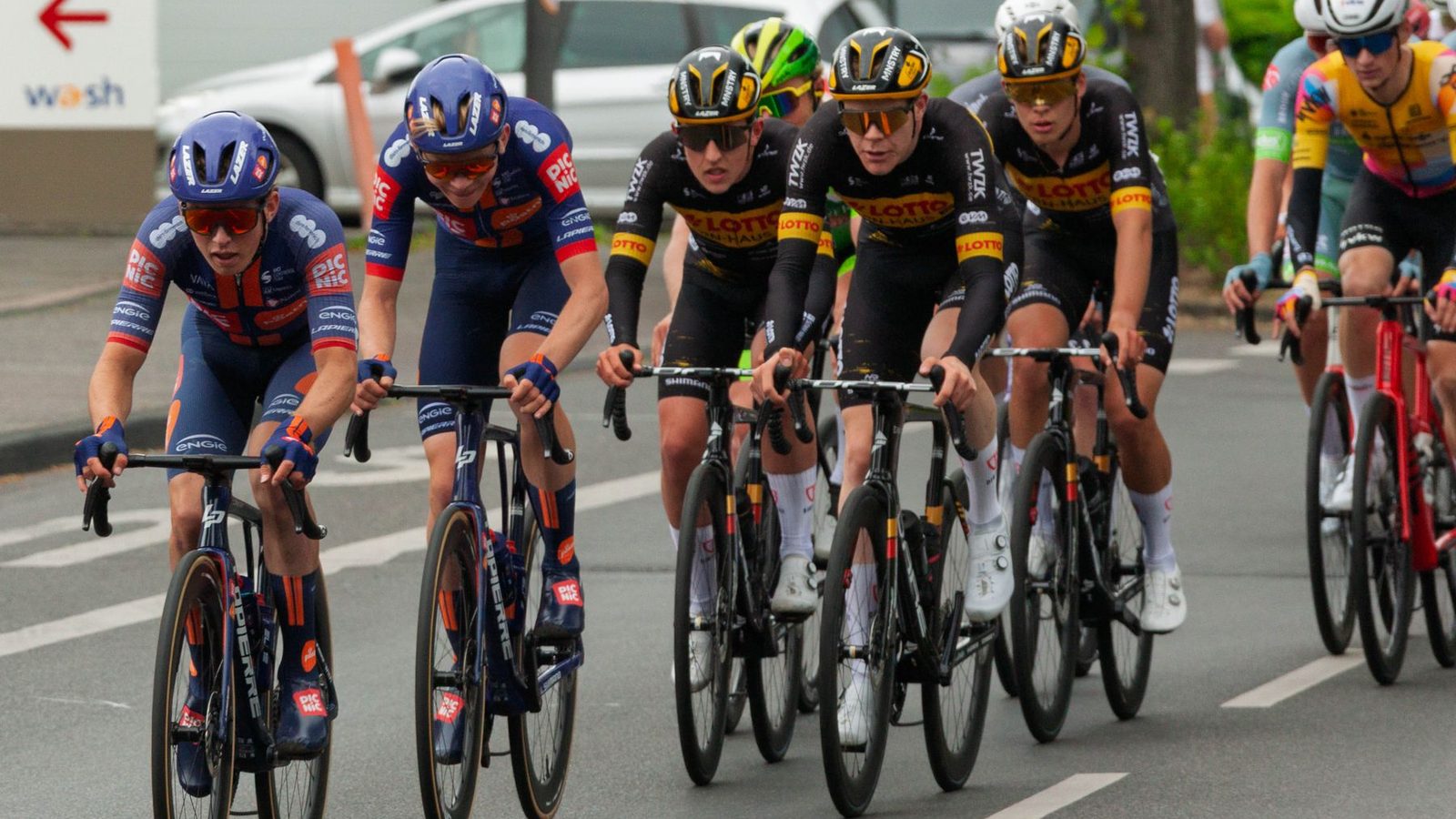
Best Cycling Helmets 2026 — Road, MTB & Commuter Picks buyers have more options than ever. A cycling helmet is the most important piece of safety equipment on a bike — it must fit correctly to work correctly. Beyond basic safety certification (CPSC, CE EN 1078), the meaningful differences between helmets are ventilation for hot-weather riding, MIPS rotational protection technology for oblique impact protection, fit system precision for a secure hold, and aerodynamics for riders who care about speed. We compared five helmets across road, mountain bike, and commuter categories from entry-level to professional-grade.
| Pick | Award | Key spec | |
|---|---|---|---|
| Giro Syntax MIPS Road Helmet | Best Overall | — | Check price |
| Bell Super Air R MIPS | Best MTB Helmet | — | Check price |
| Specialized Evade 3 MIPS | Best Aero | — | Check price |
| Bell Qualify MIPS | Best Budget | — | Check price |
| Giro Register MIPS | Best Commuter | — | Check price |
The Giro Syntax MIPS is the road cycling helmet benchmark for riders who want genuine safety technology, solid ventilation, and precise fit at a price that doesn't require professional-level justification. MIPS (Multi-directional Impact Protection System) adds a low-friction liner that allows the helmet to rotate slightly on impact, reducing rotational force transmitted to the brain — the technology that Virginia Tech's independent helmet safety research consistently ranks as meaningfully protective. Giro's Roc Loc 5 fit system allows tool-free micro-adjustment of both the dial (circumference) and the harness height, ensuring a secure, rattle-free fit on road vibration. At $150, it's the right investment for serious recreational and enthusiast road cyclists who ride regularly.
Mountain biking requires different helmet decisions than road riding — descending technical trails carries face-impact risk that open-face road helmets don't address, but pedaling uphill for an hour in a full-face helmet is hot and heavy. The Bell Super Air R solves this with a removable chin bar that converts between open-face (for climbing and cross-country) and full-face (for descents and technical sections) in seconds. MIPS Spherical — Bell's implementation that uses two concentric shells rather than a liner — provides rotational protection. For trail riders doing mixed terrain with both climb and descent sections, the convertible design eliminates the choice between protection and comfort. A dedicated cross-country or enduro-only rider could go lighter, but for all-mountain use the Super Air R is the definitive choice.
The Specialized Evade 3 is the helmet for riders who chase speed — the aero channel design is wind-tunnel validated to reduce drag meaningfully at race pace. For riders regularly hitting 35+ km/h (22+ mph) on flat terrain, the aerodynamic savings are measurable over a two-hour ride. Specialized's MiniMe fit system integrates the adjustment mechanism into the helmet body rather than external hardware, reducing aerodynamic drag from fit components while improving precision. The MIPS integration doesn't compromise the aero shape — a real engineering achievement. For recreational riders who mostly climb and descend at lower speeds, the aero savings are academic. For competitive cyclists, gran fondo riders, and criterium racers, the Evade 3 is worth the premium.
The Bell Qualify MIPS makes the most important cycling helmet technology — MIPS rotational protection — available at $65, which is remarkable. Virginia Tech's research consistently shows MIPS helmets outperform non-MIPS helmets in rotational impact scenarios; the fact that you can now get this protection for $65 rather than $150+ is a genuine consumer win. Ventilation with 15 vents is adequate for recreational paced riding (not ideal for hot aggressive climbs), and the Float Fit retention system is simpler than Giro's Roc Loc but functional. CPSC certified for the US market. For beginner cyclists, children's cycling (they outgrow helmets), and casual riders who want real protection without spending $150, the Qualify MIPS is the obvious recommendation.
Commuter cyclists have a different priority set than road racers — a helmet that doesn't look out of place walking into an office, that integrates safely with city infrastructure, and that provides real protection without the aggressive sporty aesthetic of road racing helmets. The Giro Register MIPS hits all three: the rounded shape is appropriate for urban cycling without looking like you're about to start the Tour de France, MIPS protection is present, the Roc Loc fit system keeps it secure through stop-and-go city traffic, and the rear LED mount integrates a tail light. For commuters who lock up at work and want something professional-looking, the Register is the standard commuter helmet recommendation.
| Helmet | MIPS | Type | Best For |
|---|---|---|---|
| Giro Syntax MIPS | Yes | Road | Best overall road |
| Bell Super Air R MIPS | Spherical | MTB convertible | All-mountain trail |
| Specialized Evade 3 MIPS | Yes | Aero road | Speed / racing |
| Bell Qualify MIPS | Yes | Road/trail | Budget / beginners |
| Giro Register MIPS | Yes | Commuter | City / urban cycling |
MIPS (Multi-directional Impact Protection System) is a low-friction liner inside the helmet shell that allows the helmet to rotate ~10–15mm on oblique impacts. Many real-world crashes involve angled impacts (falling sideways, glancing blows) that generate rotational forces — MIPS reduces the rotational energy transmitted to the brain. Virginia Tech's independent reputation system for helmets consistently gives higher ratings to MIPS-equipped helmets. At $65 (Bell Qualify) MIPS is now accessible at entry-level pricing. If you're buying a new helmet, choose MIPS over non-MIPS at equal price points.
Measure head circumference with a soft tape measure 1 inch above your eyebrows and select the size accordingly. The helmet should sit level on your head with the front edge 1–2 finger-widths above your eyebrows. Straps should form a V shape below each ear, and the chin strap should allow only two fingers between strap and chin when buckled. The retention system (dial at the back) should be snug — you should be able to shake your head vigorously without the helmet moving independently. If it rocks forward and backward, tighten the retention dial or adjust the harness height.
Replace after any significant impact — even if the helmet shows no visible damage. EPS foam (the inner liner that absorbs impact energy) deforms permanently during an impact and cannot protect as effectively from a second impact. Manufacturers generally recommend replacing helmets every 3–5 years regardless of impact, as UV exposure and sweat degrade the foam and shell over time. If you crash and the helmet took impact, replace it immediately regardless of apparent condition — internal foam damage is invisible externally.
You can use a road helmet for cross-country mountain biking, but a road helmet is inadequate for technical trail riding where face impacts are possible. For XC mountain biking on non-technical trails, a standard road helmet is fine. For trail riding, enduro, and anything with technical descents or significant jump features, a dedicated MTB helmet with extended rear coverage (or a convertible like the Bell Super Air R) is the appropriate choice. Full-face helmets are required for downhill mountain biking.
See also: Best Mountain Bike Shoes • Best MTB Knee Pads • Best Fitness Trackers • Best Running Shoes
The best cycling helmets 2026 — road, mtb & commuter picks balance performance, value, and durability. Our top picks cover a range of budgets and use cases — see the full comparison above for our ranked recommendations.
Cycling Helmets 2026 — Road, MTB & Commuter Picks range in price from $150 at the budget end to $75 for premium options. The best value is usually somewhere in the middle — see our picks above for specific price breakpoints.
MIPS (Multi-directional Impact Protection System) is a low-friction liner inside the helmet shell that allows the helmet to rotate ~10–15mm on oblique impacts. Many real-world crashes involve angled i
For most first-time buyers, we recommend starting with a mid-range option rather than going straight to the most expensive cycling helmets 2026 — road, mtb & commuter picks. Giro Syntax MIPS Road Helmet is a solid starting point based on owner reviews and published specs.
Yes — quality cycling helmets 2026 — road, mtb & commuter picks are worth the investment for anyone who uses them regularly. The key is matching the spec to how often and how hard you'll use them. Our picks above flag the best value at each price point so you're not overpaying.