
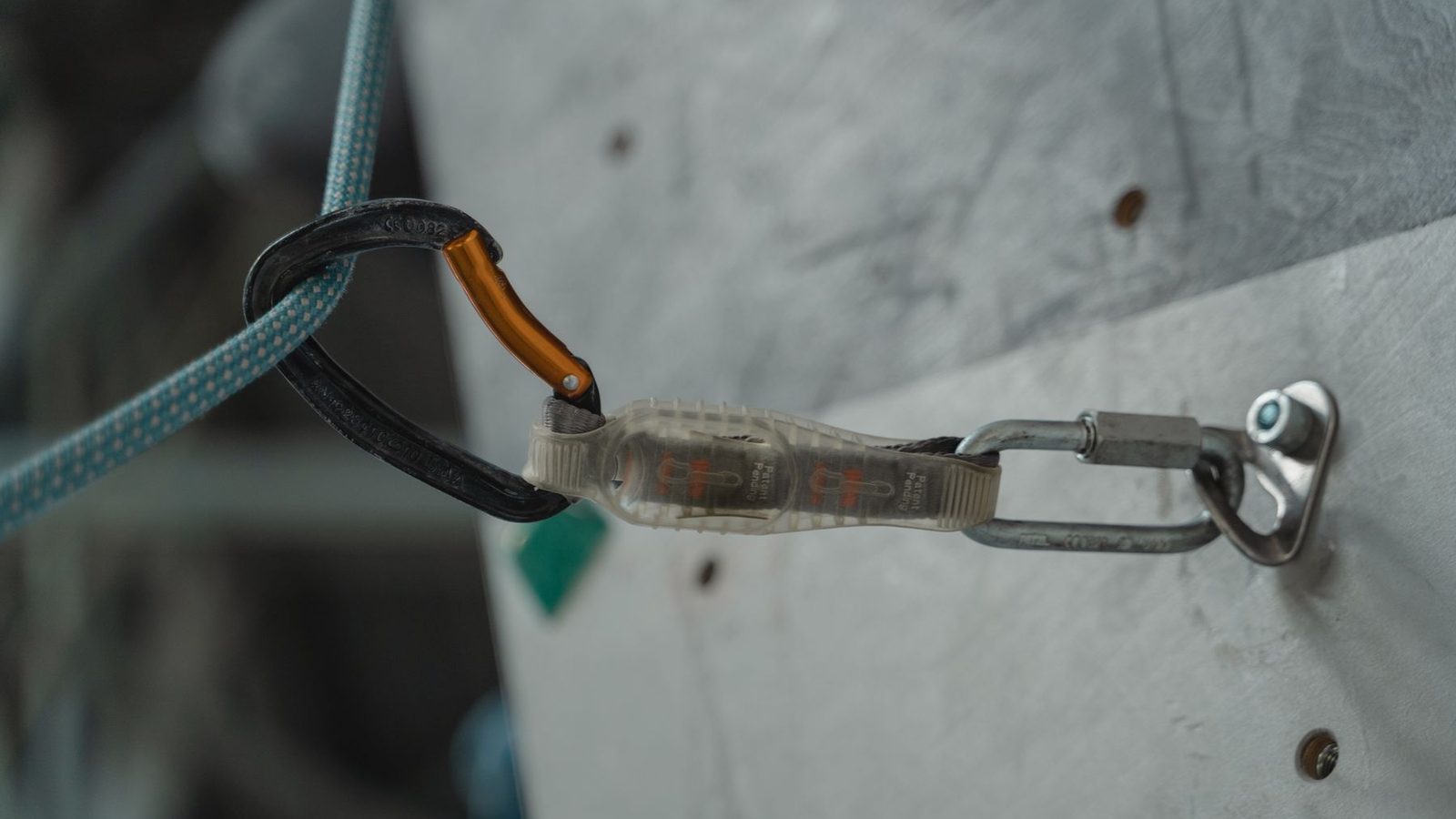
Best Carabiners 2026 — Locking, Non-Locking & Belay buyers have more options than ever. Carabiners are the metal clips that connect every element of a climbing system — ropes to harnesses, protection to rope, anchors to belayers. The fundamental distinction: locking carabiners (the gate can be locked closed with a screw, twist-lock, or magnetic mechanism) for load-bearing safety-critical connections; non-locking carabiners (the gate springs closed but can open under accidental pressure) for quickdraws and clipping bolts where speed of connection matters. Gate type matters: solid gates are durable; wire gates are lighter and don't freeze as easily in cold; keylock noses prevent snagging during clipping. We compared five carabiners for different climbing and outdoor use cases.
| Pick | Award | Key spec | |
|---|---|---|---|
| Black Diamond RockLock Screwgate Carabiner | Best Overall Locking | — | Check price |
| Petzl Attache 3D Screwgate Carabiner | Best Belay | — | Check price |
| Black Diamond Oz Wiregate Carabiner | Best Lightweight | — | Check price |
| Black Diamond HotWire Quickdraw (5-Pack) | Best Quickdraw | — | Check price |
| CAMP USA Orbit Locking Carabiner (3-Pack) | Best Value Pack | — | Check price |
The Black Diamond RockLock Screwgate is the locking carabiner that climbing instructors recommend as the starting point for new climbers building their first rack — the screwgate mechanism is the simplest to understand and inspect, the pear shape is the correct format for most belay devices and rappel setups, and BD's safety track record makes it the low-risk choice when the piece is connecting your harness to an anchor. At $19 it's priced appropriately for a safety-critical piece that should last 10+ years with normal use. The manual screwgate's only disadvantage is the habit requirement: always screw it shut, always check it. This habit is foundational to climbing safety regardless of which locking mechanism you use.
Petzl's Attache 3D is engineered specifically for the belay position — the three-dimensional spine shape keeps a GriGri or ATC-guide oriented in the correct loading plane during the rope management movements that belaying requires. Carabiners loaded across the minor axis (cross-loaded) have dramatically lower strength ratings than major-axis loading — the Attache 3D's 3D shaping reduces the likelihood of cross-loading during dynamic belay use. For climbers who belay frequently and want a carabiner designed specifically for the task (rather than a general-purpose locker used for belaying), the Attache 3D is the purpose-built option.
The Black Diamond Oz Wiregate is the carabiner for climbers building sport climbing quickdraws or alpine rack systems where every gram matters across 15–25 pieces. At 28g per carabiner, switching from 45g solid-gate carabiners saves 17g per piece — across a 20-piece sport rack that's 340g (nearly 12 oz) of weight reduction. The wiregate design's cold-resistance advantage is most relevant for ice climbing and high-altitude alpinism where temperatures cause solid gate springs to stiffen or freeze. For general sport climbing, wiregate vs. solid gate is largely a weight consideration — both function adequately in normal temperatures.
Black Diamond's HotWire Quickdraw 5-pack is the starting point for sport climbers transitioning from gym to outdoor climbing — at $79 for five draws it's the value entry into a quality quickdraw setup from the most trusted US climbing brand. The mixed gate design (solid bolt-end, wire rope-end) is BD's engineering compromise that prioritizes clip feel at the bolt (where smooth one-handed clipping matters) and weight at the rope end (where the carabiner is handled less and wire-gate weight saving applies). Building a 10-draw rack requires two 5-packs at $158 total — less than purpose-specific rope-end/bolt-end separate carabiner + sling combinations.
CAMP's Orbit locking 3-pack is the value option for climbers who need multiple locking carabiners — anchors require 2–3 lockers, rappels require 1–2, and personal anchors require 1–2, meaning a typical trad or multi-pitch climbing setup requires 6–8 locking carabiners. Buying individually at $19–22 per piece (BD or Petzl) adds up quickly; the CAMP Orbit 3-pack at $35 provides UIAA-certified locking carabiners at $11.67 each, building out a multi-piece locking system at half the cost. CAMP's Italian heritage (they've made climbing hardware since 1889) means the quality difference vs. BD or Petzl is negligible for most climbing applications.
| Carabiner | Type | Gate | Best For |
|---|---|---|---|
| BD RockLock Screwgate | Locking HMS | Screwgate | Anchors / rappel / toprope |
| Petzl Attache 3D | Locking HMS | Screwgate | Belay device use |
| BD Oz Wiregate | Non-locking | Wiregate | Quickdraws / lightweight alpine |
| BD HotWire Quickdraw 5-Pack | Quickdraw set | Mixed | Sport climbing protection |
| CAMP Orbit Locking 3-Pack | Locking | Twist-lock | Budget locking / multi-piece system |
Three non-negotiable carabiner rules: (1) Never use a carabiner for life-safety loads without UIAA or CE certification markings on the spine. Unrated carabiners (keychain carabiners, utility clips) have no defined strength and should never be used in climbing systems. (2) Always orient a carabiner for major-axis loading. A locking carabiner loaded gate-down (minor axis) or cross-loaded (diagonal) can fail at 7kN vs. 24kN on the major axis — a catastrophic difference. The rope or load should always hang from the spine opposite the gate, not the gate itself. (3) Retire a carabiner after any fall that has loaded it at force (a long leader fall may stress a carabiner beyond its design fatigue limits even if there's no visible damage), after any significant impact (dropped on concrete from a significant height), or after any visible damage (cracks, deep grooves from rope wear, gate that no longer snaps shut cleanly). Carabiners are inexpensive relative to what they protect — when in doubt, retire it.
See also: Best Climbing Harnesses • Best Climbing Shoes • Best Headlamps • Best Backpacking Gear
The best carabiners 2026 — locking, non-locking & belay balance performance, value, and durability. Our top picks cover a range of budgets and use cases — see the full comparison above for our ranked recommendations.
Carabiners 2026 — Locking, Non-Locking & Belay range in price from $19 at the budget end to $35 for premium options. The best value is usually somewhere in the middle — see our picks above for specific price breakpoints.
Three non-negotiable carabiner rules: (1) Never use a carabiner for life-safety loads without UIAA or CE certification markings on the spine. Unrated carabiners (keychain carabiners, utility clips) ha
For most first-time buyers, we recommend starting with a mid-range option rather than going straight to the most expensive carabiners 2026 — locking, non-locking & belay. Black Diamond RockLock Screwgate Carabiner is a solid starting point based on owner reviews and published specs.
Yes — quality carabiners 2026 — locking, non-locking & belay are worth the investment for anyone who uses them regularly. The key is matching the spec to how often and how hard you'll use them. Our picks above flag the best value at each price point so you're not overpaying.