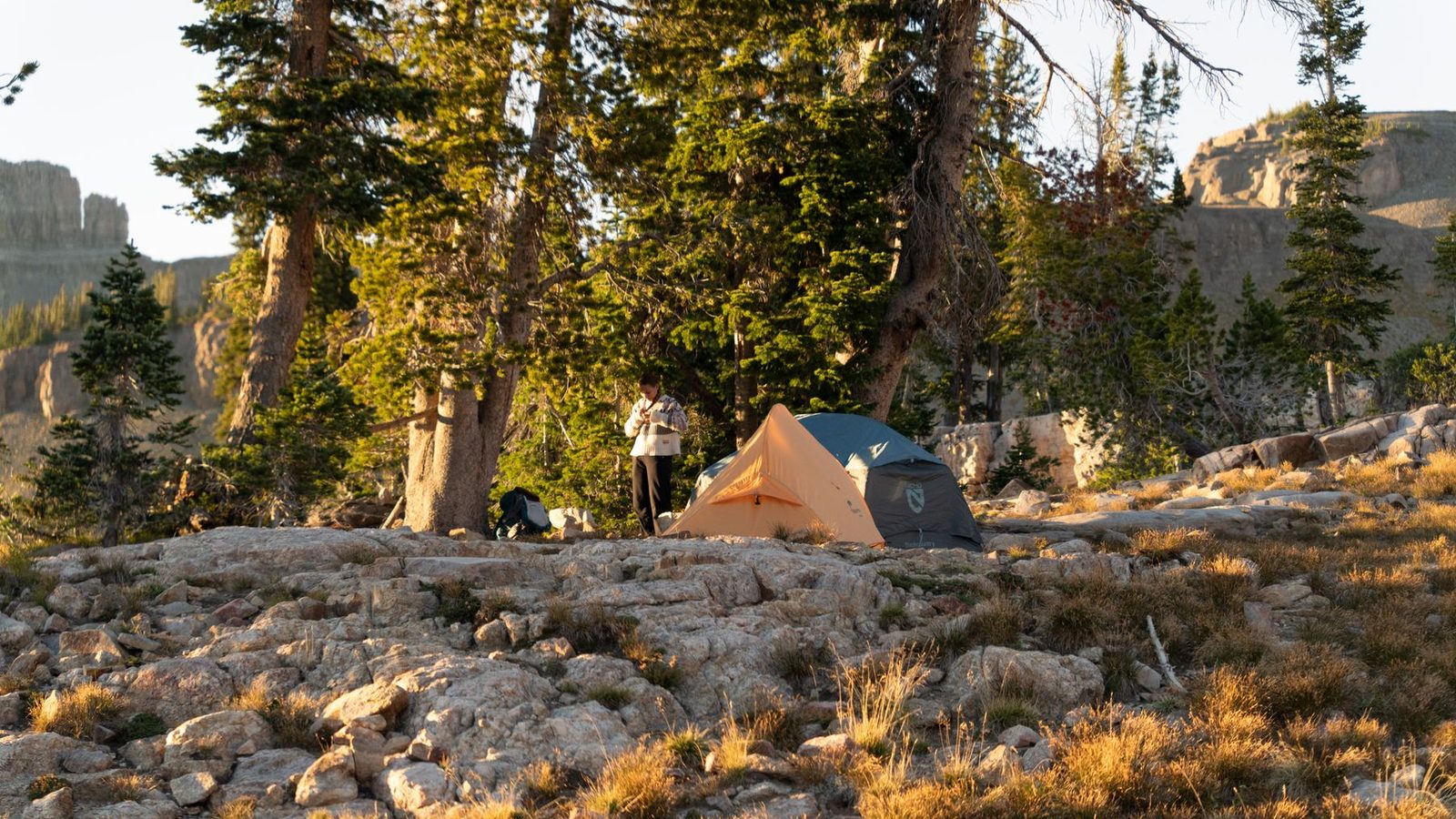
Best Backpacking Tents Over $300 for 2026 buyers have more options than ever. Premium backpacking tents cost more because they're lighter, more weatherproof, and better designed for the realities of backcountry camping. These are the ones that earn their price.
| Pick | Award | Key spec | |
|---|---|---|---|
| Big Agnes Copper Spur HV UL2 | Best Overall | — | Check price |
| Nemo Hornet OSMO Elite 2P | Best Ultralight | — | Check price |
| MSR Hubba Hubba 2-Person | Best All-Conditions | — | Check price |
| Hilleberg Anjan 2 | Best Premium Build | — | Check price |
| Zpacks Duplex Tent | Best for Thru-Hiking | — | Check price |
The Copper Spur HV UL2 is the benchmark 3-season ultralight tent. At 2 lbs 14 oz, the hubbed pole architecture creates near-vertical walls that maximize headroom, and the dual-door/dual-vestibule design works well for couples.
Nemo's OSMO fabric maintains structure throughout a rainy night unlike conventional nylon. The Hornet Elite 2P weighs exactly 2 lbs and sets up fast. Two-person fit is snug but the weight savings are real.
The Hubba Hubba has been the gold standard for reliable all-conditions backpacking tents for a decade. The pole structure handles serious weather and the build quality is excellent.
Hilleberg builds tents the way serious equipment should be built — heavy, expensive, and capable of going places that would destroy lesser equipment. The Anjan 2 is their lightest option with true 4-season capability.
Zpacks' Dyneema Composite Fabric tent weighs less than 2 lbs for two people. Requires trekking poles to pitch and takes a few trips to master. For thru-hikers counting every ounce, there's nothing else like it.
Most backpackers need a 3-season tent — built for spring through fall conditions including rain and moderate wind. True 4-season tents have fewer mesh panels, stronger poles, and reinforced fabric for winter camping and heavy snow load. Don't buy a 4-season tent for 3-season use — they're heavier, hotter, and more expensive than necessary.
True ultralight tents (under 2 lbs 8 oz for two people) make compromises in livable space, condensation management, and weatherproofing. The Copper Spur and Hubba Hubba sit in the sweet spot of reasonably light and genuinely livable. Going lighter than 2 lbs typically means a tighter fit and fussier setup.
Freestanding tents stand on their own without stakes and can be moved after setup. Non-freestanding tents require precise staking and trekking poles. For beginners, freestanding is far more user-friendly — especially in the dark on unfamiliar terrain.
If you camp 10+ nights per year, yes. A premium tent lasts 10–20 years with care, amortizing to $25–55 per year. The weight savings on a lighter premium tent also compound across every mile you hike with it.
Never store it wet — always pitch and dry before packing away long-term. Store loosely in a large sack, not compressed. Seam-seal every 1–2 years depending on use.
See also: Best Backpacking Gear • Best Ultralight Backpacks • Best Cold Weather Sleeping Bags
The best backpacking tents over $300 for 2026 balance performance, value, and durability. Our top picks cover a range of budgets and use cases — see the full comparison above for our ranked recommendations.
Backpacking Tents Over $300 for 2026 range in price from $550 at the budget end to $699 for premium options. The best value is usually somewhere in the middle — see our picks above for specific price breakpoints.
Most backpackers need a 3-season tent — built for spring through fall conditions including rain and moderate wind. True 4-season tents have fewer mesh panels, stronger poles, and reinforced fabric for
For most first-time buyers, we recommend starting with a mid-range option rather than going straight to the most expensive backpacking tents over $300 for 2026. Big Agnes Copper Spur HV UL2 is a solid starting point based on owner reviews and published specs.
Yes — quality backpacking tents over $300 for 2026 are worth the investment for anyone who uses them regularly. The key is matching the spec to how often and how hard you'll use them. Our picks above flag the best value at each price point so you're not overpaying.